MAM
Indian marketers most optimistic about brands performance in 2013: Ipsos Survey

MUMBAI: Indian marketers are most optimistic about the expected outlook of their brands in 2013, with 85 per cent confident that their band will perform better than 2012, according to Ipsos Asia Pacific Marketers Outlook 2013 Survey.
More than four out of ten (43 per cent) Indian marketers said their company has performed better than expected in 2012, in terms of sales across India; over three in ten (33 per cent) say it was same as previous year and about 24 percent believe it was worse than excepted.
Ipsos in India head of marketing communications Biswarup Banerjee said, “Understanding target audience and working on a shared strategy were top performing capabilities in 2012 but are less prioritized in 2013; while measuring campaign effectiveness and creative marketing solutions are the top priorities this year for Indian Marketers. This suggests that marketers are setting higher standards and becoming more result-driven in 2013.”

Improving overall marketing effectiveness/ enhance ROI measurements (68 per cent), building greater brand loyalty (61 per cent), develop more integrated marketing strategy (60 per cent), and to further develop the potential of digital media platforms (57 per cent) such as social networking sites, blogs, mobile, etc. are the key challenges of Indian marketers in 2013.
They expect better quality insights and creative thinking from their agency partners. Indian marketers think that social media; CRM and PR will take up a higher role in marketing communication plan.
Marketers are highly optimistic about their brand outlook in 2013, but are more conservative towards their respective industry outlook. Retail industry marketers are less optimistic about the outlook of their brands.
“With sectors from automotive to finance, healthcare to consumer products all demonstrating positive outlooks for 2013; we expect to see smarter spending and strategic deployment of always-limited-resources so that marketers can focus on communicating with their most profitable customers. Learning how to tailor content, channel, frequency and message to emotionally engage with key segments will be the difference between budgets well spent and money wasted,” added Banerjee.
In the Asia Pacific half of marketers plan to increase their overall marketing budget including media spend and brand investment, reinforcing the positive sentiment in 2013. Seventy percent of Indian marketers and 59 percent Chinese marketers’ have plans to increase overall budget for marketing investments in 2013.
For 2013, one-third of the marketers will be working on a budget between $1 million – $5 million. Consumer product companies are likely to have a much larger budget.
Ipsos Asia Pacific Marketers Outlook 2013 study had three fundamental objectives – to gauge business performance for 2012; to understand the outlook for 2013 in terms of business performance and marketing investment; and to evaluate current trends in marketing actions and strategies.
Ipsos interviewed 372 senior marketing professionals online in December 2012 – January 2013, out of which 30 percent respondents were from Mainland China and 19 per cent were from India. More than half the respondents in India come from consumer products, finance and healthcare industry.
Digital marketing channels are not surprisingly given a higher role in 2013, especially social media which is considered more important than online ads, and mobile marketing. Social media still has large untapped potential to reach huge mobile consumers base, especially considering the increasingly high mobile/ smartphone penetration in India.
“Marketers not only need to reinforce their presence in the social media space, but more importantly, to think about what they are going to use digital media for (e.g. customer engagement, brand building) and how to develop their unique positioning in this fast growing channel,” added Banerjee.
While social media / viral (21 per cent) are cited as the most effective medium in the next three years, TV (21 per cent) is still regarded as an important medium in the future considering the large number of uneducated population in India who patronise TV. So television in India still continues to resist the rise of digital channels in a large way.
Company websites (83 per cent), dedicated brand web page (80 per cent) and social networking sites (68 per cent) will be the most important digital media channels to be used by marketers’, therefore establishing unique positioning will become more important in order to differentiate from competitors.






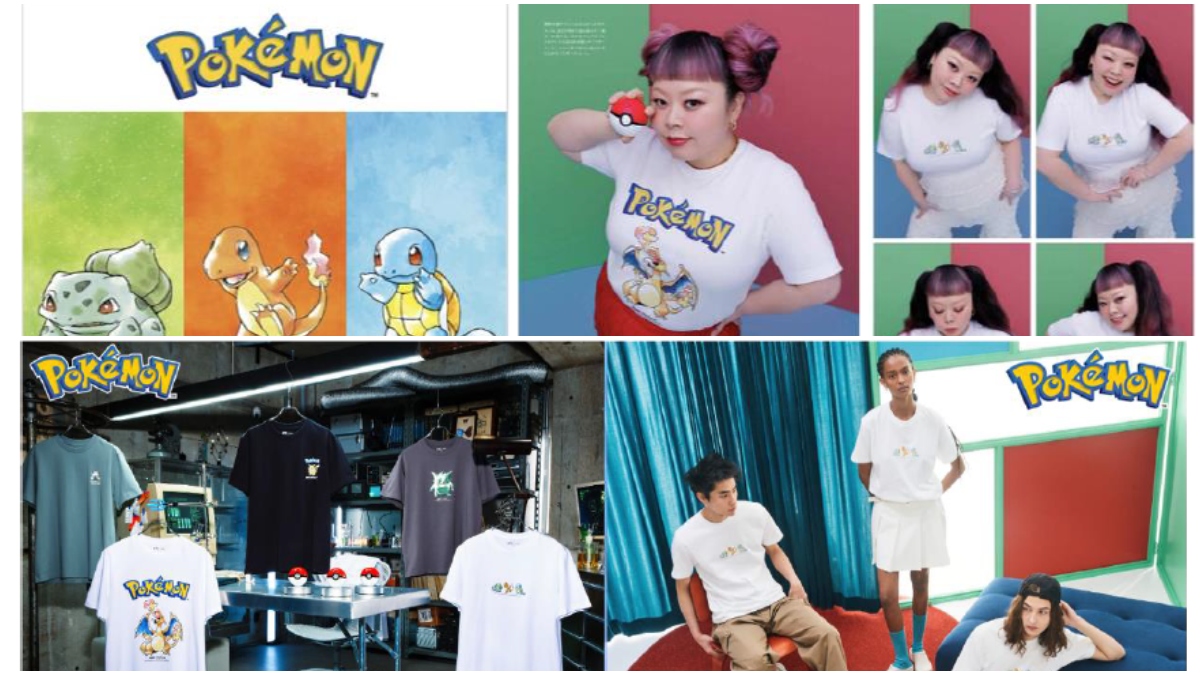
Uniqlo’s UT graphic t‑shirt brand will release a collection in 2026 to mark the 30th anniversary of Pokémon. The designs will feature artwork in the original watercolour style from the first generation of the game. The items will be available from Monday, 23 March.
A special interview with actress Naomi Watanabe, a long‑time Pokémon fan, will be published on the Uniqlo website. The discussion covers her first experiences with Pokémon, her interest in the franchise, and her career as an international figure. The interview will also appear in UT Magazine, 2026 Spring Summer issue 13, which will be available from March at Uniqlo stores worldwide.
The collection features designs from the original Pokémon release, using the watercolour‑style artwork with its soft colours and hand‑drawn character. The lineup recalls the Pokémon familiar to older fans while introducing younger audiences to new interpretations. Five matching designs for adults and children are included, allowing coordinated outfits. The collection is intended to be worn as everyday clothing and is accessible across age groups.
Overview of Pokémon UT
- Launch date: 23 March 2026 (Monday)
- Product lineup: Men’s t‑shirts, five designs, Rs 1,490; Children’s t‑shirts, five designs, Rs 990
- Store availability: All Uniqlo stores in India, and the online store









