MAM
How agencies deal with defaulters


MUMBAI: The history of the advertising industry has its fair share of examples of client default on payments leading to agencies bleeding losses. A classic case is that of JWT Walter Thompson (Now known as JWT), having to wind up back in 1974 due to non-payment by clients. Although the company resurrected a few years later, it still shows that companies aren’t secure especially when clients declare themselves bankrupt.
In a fresh case that stirred the conversation about defaulting clients, media agency Madison Worldwide and creative agency Leo Burnett have filed a case against Chinese electronic brand LeEco over non-payment of dues in India. It failed to make payments for the period from January-December 2016, for which Madison is suing the company for Rs 39 crore plus interest in a Hong Kong court, while Leo Burnett has filed a case in the Bombay High Court for its dues of Rs 2.65 crore.
In a typical scenario, if an agency doesn’t pay the media on time, it stands to be blacklisted by the media and will lose its accreditation with the industry. This could be a deal-breaker for them since, without accreditation, agencies have to pay the media in advance for any further business. In such a situation, if the agency does not have a large amount of fund to spare, it might have to shut down.

Dentsu Aegis Network chairman and CEO South Asia Ashish Bhasin says, “Sometimes clients delay payments because there is a genuine reason but quite often, clients default on the payments deliberately and that puts the agency in a tight spot. Although there is a legal route, it is often cumbersome and long-drawn and agencies don’t have that kind of bandwidth. But if there is no option, that is what they have to do.”
Calling it unfair and need for stronger laws to be implemented for the same, Publicis Worldwide chief creative officer Bobby Pawar believes it should be illegal for clients to get away without paying for the services they’ve consumed. “It is very unfortunate as more often than not, it is the agency that has to bear the cost of it,” he says.
For print ads, the credit period is usually 45 days from the month of activity. Here, the agency has to pay media, irrespective of client payment and earns only when the client pays. Non-payment or outstanding can result in blacklisting of the agency and all activities for the agency across all clients.
For television and radio, the credit period is 60 days from the month of activity. The agency has to pay only after the client pays, and earns only when payment happens. Problematic clients or habitual defaulters are closely monitored by Indian Broadcasters Federation (IBF), the regulatory body for TV and radio. Serial offenders work mostly on advance while tripartite agreements are usually the norm.
For instance, if a client owed the agency Rs 7.65 crore at a certain point in time which was long overdue, at five per cent media commission, the agency retained only Rs 38 lakh. Now if the client still has an outstanding unpaid debt of Rs 1.56 crores, the net amount is a loss of Rs 1.18 crore.
Havas Media chief finance officer Pritesh Bhatnagar believes bad debts always hit the bottom line and its impact on P&L is always significant. “Agencies need to be more prudent in agreeing to the credit terms with clients. We ensure we follow our internal credit control guidelines and policies to safeguard our interests,” he adds.
Ad agencies must compulsorily approach the Advertising Agencies Association of India (AAAI) to recover outstanding debts but with no assurance of recovery. At best, the AAAI can prevent the media from taking any new contracts from the same client.
Extended credit lines are vital to maintaining a competitive edge and brands may be required to have credit insurance as part of a tender, to reassure stakeholders or satisfy the bank. Advertising and media companies face risks when selling and often rely on future bookings for media space and general advertising from a number of different providers. While credit checks are routinely conducted on new clients, it is impossible to track their status for the duration of the agreement. Remarking that the industry is starting to get a little more organised, Bhasin makes a point that stringent actions against such clients need to be taken not just by agencies, but also by involving various industry bodies. “It is important for agencies to do reasonable credit rating check for clients.”







Brands
YES Bank hands the keys to SBI veteran Vinay Tonse as it bets on a new era
Former SBI managing director appointed as YES Bank’s new MD and CEO
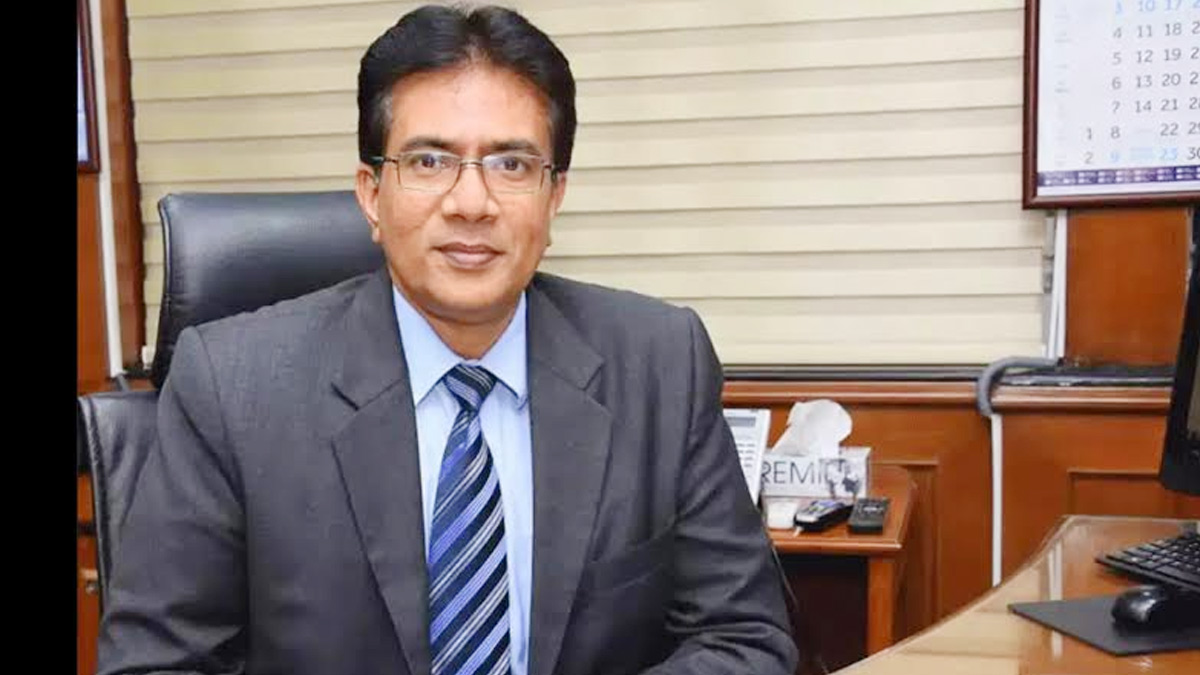
MUMBAI: YES Bank is done rebuilding. Now it wants to grow. The private sector lender has appointed Vinay Muralidhar Tonse as managing director and chief executive officer-designate, with RBI approval secured and a start date of April 6, 2026 confirmed. The three-year term signals the bank’s intent to shift gears from crisis recovery to full-throttle expansion.
Tonse, 60, is no stranger to scale. Most recently managing director at State Bank of India, he oversaw a retail book of roughly $800bn in deposits and advances, one of the largest in the country. Before that, he ran SBI Mutual Fund from August 2020 to December 2022, a stint that saw assets under management surge from Rs 4.32 lakh crore to Rs 7.32 lakh crore across market cycles. Add stints in Singapore and four years leading SBI’s overseas operations in Osaka, and the incoming chief arrives with a genuinely global CV.
His academic grounding is equally solid: a commerce degree from St Joseph’s College of Commerce, Bengaluru, and a master’s in commerce from Bangalore University.
The appointment follows an extensive search and evaluation process by the bank’s Nomination and Remuneration Committee. NRC chairperson Nandita Gurjar said the committee unanimously backed Tonse, citing his leadership track record, governance credentials and ability to drive the bank’s next phase of transformation.
Non-executive chairman Rama Subramaniam Gandhi was unequivocal. “I am certain that Vinay Tonse, with his vast experience as a senior banker, will propel YES Bank to its next phase of growth,” Gandhi said, adding that the bank remains focused on strengthening its retail and corporate banking franchises and expanding its branch network.
Rajeev Kannan, non-executive director and senior executive at Sumitomo Mitsui Banking Corporation, the bank’s largest shareholder, said Tonse’s experience across retail, corporate banking, global markets and asset management positioned him well to lead the lender. SMBC said it looks forward to working with Tonse and the board as YES Bank pursues its ambition of becoming a top-tier private sector lender anchored in strong governance and sustainable growth.
Tonse succeeds Prashant Kumar, who took the helm in March 2020 when YES Bank was in freefall following a severe financial crisis, and spent six years painstakingly stabilising the institution, rebuilding governance and restoring operational scale. Gandhi was generous: “The bank remains indebted to Prashant Kumar, who is responsible for much of what a strong financial powerhouse YES Bank is today.”
Tonse, for his part, struck a purposeful note. “Together with the board and my colleagues, I remain deeply committed to creating long-term value for all our stakeholders,” he said, pledging to build on Kumar’s foundation guided by his personal motto: Make A Difference.
Beyond the balance sheet, Tonse played cricket at college and club level and represented Karnataka in archery at the national championships — sports he credits with teaching him teamwork, situational leadership, discipline and focus. In quieter moments, he reaches for retro Kannada music, classic Hindi songs, and the crooning of Engelbert Humperdinck, Mukesh and Kishore Kumar.
YES Bank has its steady-handed rebuilder in Kumar to thank for survival. Now it has a scale-obsessed growth banker at the wheel. The next chapter starts April 6.