Ad Campaigns
Breathe easy burnout is not your creative destiny

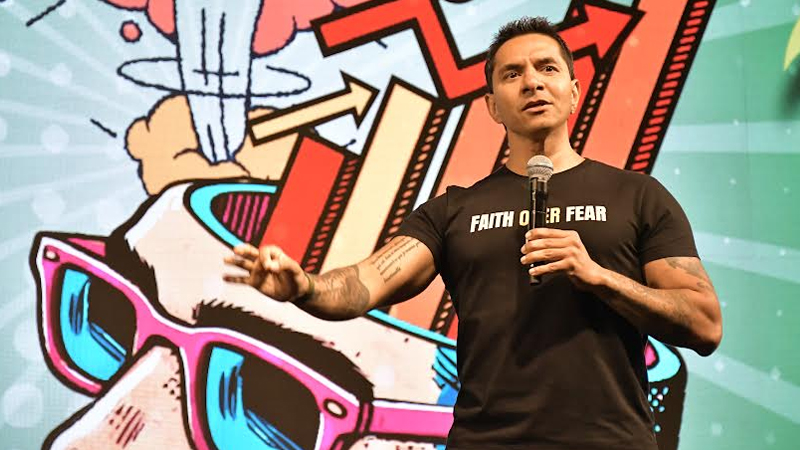
MUMBAI: Tired is not a personality trait. And if your big ideas feel more foggy than fiery, wellness expert Luke Coutinho might know why. At the Goa Fest 2025 fireside chat with VML India’s Babita Baruah, he unpacked the anatomy of burnout and why hustle culture is creativity’s worst enemy. “Are you exhausted or just on autopilot?” That was Luke Coutinho’s call to action to a room full of creative professionals who raised their hands at the mere mention of burnout. But Coutinho, integrative medicine expert and long-time advisor to India’s armed forces wasn’t here to peddle another green juice. He was here to challenge the cult of grind and offer a surprisingly simple antidote: adapt.
Burnout, he explained, isn’t just about being busy. It’s chronic stress that numbs joy, dulls creativity, and disconnects people from the very things that once brought them meaning. “It’s when your favourite song doesn’t hit the same, your child’s smile doesn’t light you up, and your morning coffee is just a prop to survive,” he said.
Contrary to social media’s rigid checklists, Coutinho advised attendees to stop chasing generic wellness trends and instead tailor health practices to their own lives. “Trying to live like a reel will burn you out faster than your deadlines,” he quipped. The solution? A mindful mix of food, sleep, movement, and emotion.

Four lifestyle levers for creative spark:
● Nutrition: Ditch junk and stimulants. They tank energy and ideas.
● Sleep: It’s not about waking up early, it’s about completing your sleep cycle.
● Emotional wellness: Channel pain into power, not procrastination.
● Movement: Walk, stretch, breathe—endorphins boost the prefrontal cortex, your creative HQ.
Coutinho dismantled hustle culture as “glorified exhaustion”. Instead, he urged for a shift from performative busyness to “purposeful urgency”. As proof, he shared a story about the architect of Dubai’s Burj Khalifa who, before his big pitch, didn’t power through but went for a swim to reconnect with himself. “Stillness before action. That’s how true creativity emerges,” said Coutinho.
He also offered a practical fix: six minutes a day. That’s all you need, he said, to begin rewiring your burnout brain:
1. Mind Sweep (Morning) – List 3 things you’re grateful for. Set a daily intention.
2. Breath Stacking (Midday) – Take 8–10 deep, slow breaths. Reset.
3. Digital Sunset (Evening) – Switch off all screens and reflect on a small win.
These micro-rituals anchor you in the present, a place creatives rarely linger.
He concluded with a reality check shaped by his work with terminal patients: “Not one of them talks about their titles or salary. They remember love, laughter, and memories.” The lesson? Life isn’t a sprint, and your legacy won’t be built in unread emails.
So the next time your creativity stalls, don’t scroll or sprint pause, breathe, and ask: what really makes me feel alive?



NATIONAL: Amazon Ads has laid out a sharply tech-led vision for the advertising industry in 2026, arguing that artificial intelligence, streaming TV and creator partnerships will combine to turn brand building into a more precise, performance-driven business.
At the heart of the shift, the company says, is the fusion of AI with Amazon’s vast trove of shopping, browsing and streaming signals, allowing advertisers to move beyond blunt reach metrics to campaigns designed around real customer behaviour.
“The future of advertising is not about reaching more people, but the right people with messages that resonate,” said Amazon Ads India head and vice president Girish Prabhu. “By combining AI with deep customer insights, we help brands move from broadcasting campaigns to having meaningful conversations wherever audiences spend their time.”
One of the biggest changes, according to Amazon Ads, will be the collapse of the wall between media planning and creative development. Retail media, powered by first-party data, is increasingly shaping everything from brand discovery to final purchase, pushing marketers to design campaigns around audience insight rather than internal instinct.
AI is also moving from a support tool to a creative engine. Agentic AI, which automates and accelerates production, is expected to make high-quality creative accessible even to small businesses, compressing weeks of work into hours and giving challengers the ability to compete with larger brands on speed and scale.
Behind the scenes, AI-driven analytics will take on a bigger role in campaign optimisation, identifying patterns, spotting opportunities and recommending actions that would previously have required teams of analysts.
Streaming TV is another big battleground. With India’s video streaming audience now above 600 million and connected TV users at 129.2 million in 2025, advertisers are set to treat streaming not just as a branding channel but as a performance engine, measured increasingly by sales, sign-ups and bookings rather than just reach.
Finally, Amazon Ads sees creators and contextual advertising reshaping how brands tell stories. Creators will act less like influencers and more like long-term partners, while scene-aware ads on streaming platforms will allow brands to insert hyper-relevant offers into the flow of what viewers are watching.
Taken together, Amazon Ads argues, these shifts mark a move towards advertising that is both more human and more measurable, where AI handles the complexity, and creativity does the persuading.