MAM
The challenges and benefits facing martech in India


NEW DELHI: Martech sounds like quite a jargonistic word to many. But, put simply, it is the tech stack run by backroom geeks in glasses who use software and web-based services to manage, automate, or execute marketing tasks and processes. Data and analytics lie at the heart of martech, giving companies better customer and market insights, helping them to respond accordingly.
Globally, it is a booming business touching Rs 739,200 crore ($121 billion) in 2019, according to a report by advisory and research firm BDO and WARC in conjunction with the University of Bristol. In India, it is coming out of its infancy with marketers just about waking up to its utility, though the software development sector has bitten a sizable piece of the global pie.
Earlier this year, WPP group company Mirum India released its Martech Survey 2020 report, which did not give any indications of the sector’s size and scale, but it revealed that marketers across India are bullish, with as many as 80 per cent of those surveyed expecting their organisation’s spends on these technologies to increase over the next five years.

Xaxis India country lead Bharat Khatri told Indiantelevision.com that there has been a significant rise in the investments that Indian brands and marketers are making in the martech space. “Around one-fourth of the overall marketing pie is being directed towards martech right now and this shift has occurred within the past few years only. Earlier, we were getting a minuscule share in the marketing pie, and it is definitely bound to grow further.”
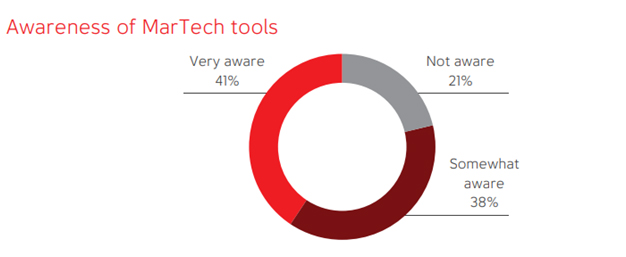
However, according to him, despite growth in adoption, the core challenge for the industry remains that most of the people who are investing in the technologies are not aware of how it is benefiting them. “Around 50 per cent of the marketers today don’t know the exact functions of martech. There is a great need to educate the industry.”
Business head of a leading insurance company acknowledges in the Mirum India report that the biggest challenge is that there are too many hands involved in the martech implementation broth, thus leading to delays. “Adding to this is the pressure caused by marketers evaluating solutions only after they identify a specific business need, which leaves them with little time to plan before arriving at a decision,” he adds. He also points out to problems of integrating the martech tools with existing technologies in an organization and the pushback from internal stakeholders towards adopting change.
Another issue stifling the sector’s growth is marketing budgets, which are limited.
Khatri explains that martech’s limitation, in the Indian context, is that one cannot instantaneously get to know if the investment being poured into it is worth it.
“It takes two to three years to understand the kind of impact the martech tools have had and the ROI. Now, for some marketers, it gets difficult to get the budgets sanctioned, and with a pandemic like Covid-19, when everyone is holding back their budgets, it is creating a big problem,” he says.
However, the industry believes that Covid2019 pandemic has certainly opened up newer and exciting opportunities for martech, and it will be wiser for the brands to latch on to it.
“COVID2019 has impacted consumer behaviour a lot and accentuated some of the consumer trends too. In the past four months, we have seen how the adoption and usage of online channels have increased,” says Logicserve Digital founder & CEO Prasad Shejale. “Consumer journeys have changed significantly and have also affected brand loyalty. This is actually a great opportunity, and smart marketers are investing in analytics tools to understand changing customer behaviour.”
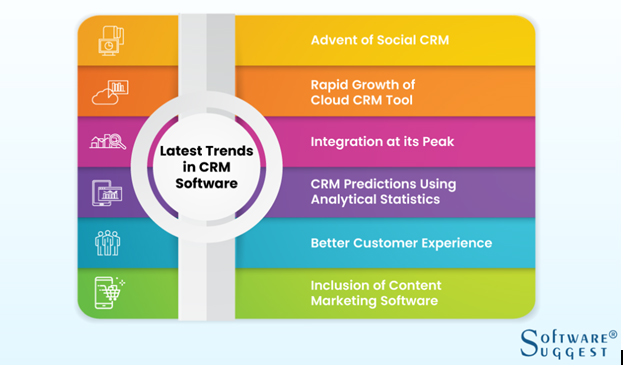
Adds Khatri: “What brands are using martech for most is understanding the consumer behaviour and their journeys – what they like, where and when they shop, etc. This has resulted in marketing being market-driven instead of sales-driven. This has resulted in great demand for technologies like customer data platforms (CDMs), tools for customer relationship management (CRM), and mobile phone data.”
Shejale agrees: “The most important tools right now are the combination of analytics-insights-CRM/CDP. These tools, along with a focused approach on the consolidation of consumer data to understand them better, are important to provide better service to the consumers across their journeys, whether online or offline. For a smooth and convenient journey across online and offline channels, CRM tools can be very effective. They can also assist in sending the right communication to your audience at the right time through the right channels.”
Another interesting trend that is, arguably, impacting the growth of martech in India is global domination in the arena. The Indian industry is currently dotted by a lot of foreign players who have been active in the space for a long time. Khatri suggests that platforms like Salesforce are quite popular.
In a e previous episode of the Media Minds 2, Zoo Media & FoxyMoron co-founders Suveer Bajaj and Pratik Gupta had said, “India, by virtue of the fact that we have been a tech hotspot so as to speak, with big boys at Infosys, Wipro and TCS setting the agenda, is globally acting as a back office for a lot of martech and a lot of adtech companies for generations. It’s funny though, like for example, even if you look at programmatic, we are about 18 months behind and what the rest of the world is.”
But Indian players are also catching up fast.
“India has a big advantage in making technology in-house and there are a lot of independent firms and also companies like ours who are a part of big global networks investing great time and energy in creating tools and technologies here. For example, last year we launched Xaxis Places, a completely homegrown technology and now 30 plus markets across the globe are using it,” Khatri shares.
Adds Zoo Media’s Pratik Gupta: “We are struggling as an agency to be able to wrap our heads around all of the marketing tech and adtech that exists pretty much out there (but) there are a lot of things that we are doing. For example, there is a marketing technology and ad technology platform that we are building inside of Instagram, which is a landing page solution providing first-party data on e-commerce.”
Ambient, C Lab, ROOH, Brandscope director Deepak Kumar, also sheds some light on the in house technologies that the agency is working on. “We created a tool called Star Metrics, which helps identify the geographical heat map indicating where the fanbase of a particular star is and where the consumers of a brand are. If those heat maps match, a darker hotspot is created indicating the perfect fitment of both, ensuring maximum engagement.”
He also mentions that the team is about to launch another technology to complement this in the coming weeks.
According to Khatri, many independent firms are also getting active in this space. Albeit one problem that these players might face in the coming few months is the market sentiment that has been created due to the pandemic, but he is sure that this is temporary.
Indeed, with the tide now rising for martech in India, it won’t be too long before it washes over many more who have been playing a wait and watch game.