Digital
Leveraging AI in digital advertising: Targeting consumers through sentiment analysis


AI has revolutionised the ways in which brands connect with their target audiences through targeting precision and hyper-personalisation. AI has also found applicability in ‘sentiment analysis’ which helps brands comprehend the emotions, opinions and attitudes of consumers by analysing their past online behaviour and interactions.
Dubbed ‘opinion mining’, sentiment analysis incorporates NLP (natural language processing) and machine learning algorithms to churn and analyse huge chunks of text data and determine whether the underlying sentiment is positive, negative or neutral. The data utilised to gauge public sentiments about a brand’s products or services are derived from social media posts, reviews, blogs, and other user-generated content.
AI-powered models backed by deep learning, have the ability to understand the nuances of language including sarcasm, context, and complex expressions thereby offering an accurate picture of consumer sentiment. The correct and real-time interpretation of these subtleties helps brands make more informed marketing strategies.

Harnessing AI-based sentiment analysis
In this user-centric world, customer feedback is crucial to understand what resonates with the target audience and what needs to be improved. Technological advancements like big data have enabled organisations to get an accurate understanding of customer opinions, seamlessly. Monitoring and understanding brand perception will help organisations fine-tune their strategies to align with market trends and consumer preferences.
1. Real-time customer insights – Sentiment analysis helps brands delve deep into the opinions and emotions of their customers by actively monitoring social media platforms, review sites and online channels. This helps businesses craft communication strategies that resonate best with consumers.
2. Personalised marketing campaigns – Personalised advertising based on the emotional state of the consumer can be helpful in improving customer experience. For example, ads offering solutions to a consumer who is frustrated about a product or service can improve brand perception.
3. Product analysis and development – AI-based sentiment analysis is very helpful in the early stages of developing a new product as it provides valuable insights into people’s opinions about its performance, features, user experience, etc. This enables brands to make data-driven improvements and foster innovation that aligns with consumer needs and preferences.
4. Reputation management – Real-time sentiment analysis helps businesses identify negative trends and potential PR crises in the early stages which facilitates timely intervention.
5. Higher ROI on Ad spend – Gauging consumer sentiments accurately helps marketers craft ads that are more relevant to the user. This improves engagement and reduces wasted ad spend.
What does the future look like?
With the evolution of AI, sentiment analysis will find greater applicability in the digital realm with more sophisticated emotion detection capabilities. Analysis of non-textual data such as images and videos may also be plausible with AI advancements which would help brands form deeper connections with their audiences.
The article has been authored by AdCounty Media co-founder and chief revenue officer Delphin Varghese.




Digital
OpenAI’s Stargate lead Peter Hoeschele exits with two senior leaders
Trio behind compute push set to join new startup amid leadership reshuffle
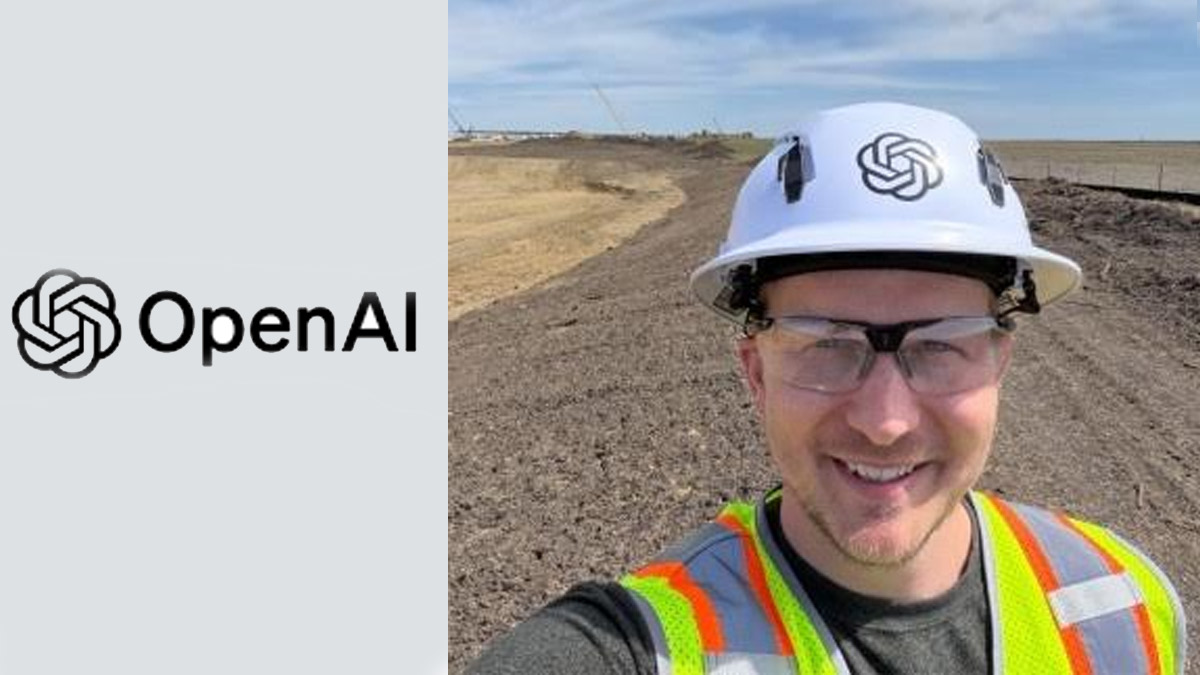
SAN FRANCISCO: Peter Hoeschele, a key figure behind OpenAI’s early Stargate data centre initiative, has exited the company, according to a report by The Information.
The departure is part of a broader leadership shift, with two other senior executives, Shamez Hemani and Anuj Saharan, also set to leave in the coming days. All three are expected to join the same new startup, although details about the venture remain under wraps.
The trio played a central role in OpenAI’s Stargate effort, an initiative aimed at building large-scale data centre capacity in-house to reduce reliance on external infrastructure providers. Their exits mark a notable moment for the company’s compute strategy as it continues to scale rapidly.
OpenAI spokesperson said in a statement to The Information, “We’re grateful for the contributions Peter, Shamez, and Anuj have made to OpenAI and wish them the very best in what comes next.” The company also pointed to the recent appointment of Sachin Katti to lead its industrial compute organisation, signalling continuity in its infrastructure roadmap.
OpenAI has indicated that it does not plan to directly replace Hoeschele’s role, suggesting a possible restructuring of responsibilities within the team.
As competition intensifies in the race to build next-generation AI systems, leadership changes in core infrastructure teams are likely to draw close attention. For now, the spotlight shifts to what this departing trio builds next, and how OpenAI adapts as it scales its ambitions.