Connect with us

iWorld

Need to create a new creative ecosystem for multiple platforms: Sameer Nair

Published

on

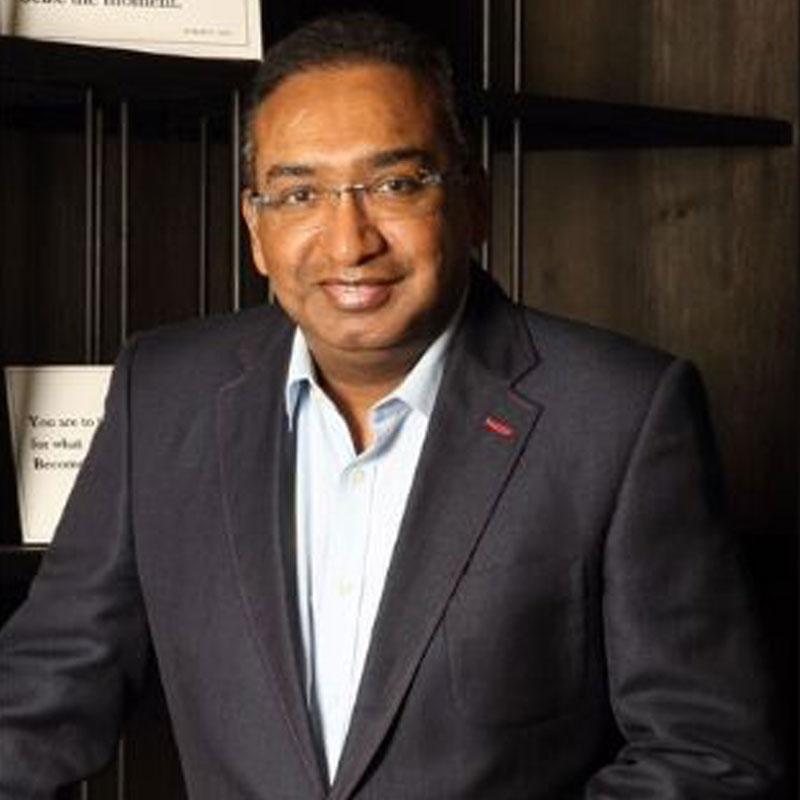
Mumbai: The OTT streaming business is not for the fainthearted and players with light wallets, said Applause Entertainment founder and chief executive officer Sameer Nair as he talks about the evolving streaming business at the CII Big Picture Summit.

While there is an opportunity to make it big in the business, it’s important to ensure that it reaches a critical mass of subscribers. “And to do that you need to make investments,” said Nair, discussing how several OTT platforms turned out to be making losses.

Elaborating on why he decided to enter the IP creation business, he said, “We are trying to work with a movie studio model. Attract a certain risk capital and produce some content. TV was funding IP creation and so the upside was being reaped by TV broadcasters. Producers did not get the upside of owning the IP. Today, there is an opportunity for content companies who take a degree of risk in content creation and license it to platforms.”

Advertisement

Until now, TV was driving investments into original programming in India as it was catering to a mass audience. It was dominated by celebrity-led reality shows and daily soaps and that’s what consumers were watching for decades. But OTT has unlocked a new audience as it caters to a mass of niches. “For example, let’s say 10 per cent of the country likes the crime genre, that’s the size of a small European nation,” he said.

But when it comes to paying for streaming services, then consumers look at the service that offers them the most value for money. “We never had HBO or Showtime in India in terms of producing original Indian content for a digitally-savvy audience. The creative ecosystem was catering to TV and films. We need to create a new ecosystem and content for multiple platforms,” he highlighted.

According to Nair, OTT platforms also offer more data on consumers so decisions can become more informed, unlike TV where broadcasters always struggled to understand consumer behaviour because TRP was the only metric. The advantage for streamer is that can be “massy and classy”. A show can be created in a widespread spoken language but subbed or dubbed in multiple regional languages at the same time hence broadening its appeal.

Advertisement

Talking about recommendation engines on OTT platforms Nair said that like any other algorithm the more you use it, the more you get out of it. “To say that I’m being shepherded by the recommendation engine and it is reducing my choice is not a fair comparison. Everyone knows that a consumer’s content viewing choices operate between new and comfort. That’s why Netflix has the ‘Play Something’ feature,” he said.

There is a notion that TV is free and that the consumer has to pay for OTT. That’s why many consumers are still keen on ad-supported streaming services. Nair said that consumers were always paying cable distribution companies to watch TV. Similarly, today OTT services are built on top of broadband companies and telcos.

Speaking about ad supported streaming, he said, “Every time you do anything regarding messaging and selling within a content experience, then it becomes an art.” There are all sorts of ways to monetise content and a lot of companies are trying to crack it. “Netflix has 214 million paid subscribers and it is the most premium streaming service globally. If five people are sharing a Netflix account then 200 million becomes one billion. If they’re watching Netflix two-three hours daily then that’s how many premium customers there are who don’t want to come into contact with regular advertising messages,” he observed.

Advertisement

Nair said that the lockdown has been a uniform experience for nearly every human being on the planet. “We used to think TV is our window to the world but actually TV is only the window into your neighbourhood. The internet is the window to the world,” he said. The inevitable outcome of this is that the consumer has become used to the fact that there is a lot more content to watch.  

Click to comment

Leave a Reply

Your email address will not be published. Required fields are marked *

eNews

India uses ChatGPT for technical tasks nearly 4 times the world average: OpenAI

From classrooms to code, India’s AI use is increasingly skill-driven and youth-led.

Published

on

MUMBAI: If code is the new currency, India is already minting it by the million prompts. In the world’s largest democracy, artificial intelligence is no longer a distant abstraction or a boardroom buzzword. It is a daily companion, drafting emails in Hyderabad, debugging code in Bengaluru, polishing essays in Delhi, and fielding life advice in towns far beyond the metros. Fresh data from OpenAI’s “Signals” initiative offers a rare, granular glimpse into how India is using ChatGPT, and the numbers suggest the country is not just adopting AI; it is actively shaping its use.

India is one of the largest markets globally for ChatGPT’s weekly active users and ranks among the top five countries for API usage. With OpenAI’s global consumer base exceeding 800 million users, most of them on free tiers, the dataset captures adoption patterns that go far beyond enterprise subscriptions.

Indian users, notably, are punching above their weight when it comes to advanced capabilities. Among ChatGPT Plus and Pro subscribers, usage of the data analysis tool is roughly four times above the global median. Use of Codex, OpenAI’s coding platform, is about three times above the median. Indians are nearly three times more likely than the global median to ask coding-related questions and almost twice as likely to seek help on education and learning.

Advertisement

This matters because it signals something economists call a shrinking “capability overhang”, which is the gap between what AI tools can do and how fully users exploit them. In India, that gap appears to be narrowing rapidly.

The geography of this coding intensity tracks the country’s technology hubs. Telangana, which is home to Hyderabad, ranks first in usage of OpenAI’s coding capabilities. Karnataka, home to Bengaluru, follows in second place, while Tamil Nadu comes third. In other words, the prompt traffic mirrors the tech corridors.

Nearly two-thirds of consumer ChatGPT messages in India are now non-work related, while slightly over one-third are tied to work. That marks a significant shift. In earlier phases of adoption, work was the dominant use case. It was only in early 2025 that non-work messages overtook professional use, and the divergence widened throughout the year.

Advertisement

Even so, India remains slightly above the global average in work-related usage. Around 35 per cent of consumer messages in India relate to work, compared with roughly 30 per cent globally.

At work, the emphasis is squarely task-oriented. Around 45 per cent of work-related conversations fall into “doing” behaviours such as drafting documents, transforming text, and completing tasks, compared with a much smaller share in non-work contexts. Technical help and writing dominate. In offices across the country, ChatGPT functions as a digital co-pilot that debugs code, polishes presentations, and unblocks stalled workflows.

Outside work, the tone shifts. Over 35 per cent of non-work messages revolve around practical guidance, which includes everyday advice and how-to queries. Roughly 20 per cent relate to seeking information. Nearly one-fifth involve writing tasks such as drafting or editing. Self-expression and learning loom large. In personal life, Indians appear to use AI less as an executor and more as an explainer, sounding board, and study partner.

Advertisement

India’s demographic dividend is clearly reflected in its AI habits.

Users aged 18 to 24 now account for just under half of all ChatGPT messages sent in the country. They surpassed the 25 to 34 age group in mid-2024 and have held the lead ever since. Globally, the 18 to 24 cohort accounts for about one-third of messages; in India, the share is markedly higher.

Combined, users aged 18 to 34 generate roughly 80 per cent of total consumer ChatGPT messages in India. Given that around 40 per cent of India’s population is under 25, the youth skew is unsurprising, but its implications are profound. Education-related queries, early-career problem-solving, and skills development are likely to dominate near-term AI impacts.

Advertisement

Usage patterns also differ by age. The 18 to 24 cohort accounts for a near majority of messages seeking practical guidance, technical help, and self-expression. Meanwhile, the 24 to 34 group sends a slightly higher share of multimedia and technical help queries relative to its overall share of usage.

If AI norms are being written in real time, it is young Indians who are holding the pen.

OpenAI does not collect gender data, but inferred patterns based on typically masculine and feminine first names reveal a measurable gap in India. A little under 60 per cent of users have typically masculine names, and just over 40 per cent have typically feminine names. This skew is more pronounced than the global average.

Advertisement

Worldwide, users with typically feminine names now account for slightly more than half of all messages. This shift occurred only in the summer of 2025, when feminine-name usage overtook masculine-name usage globally. In India, the gap persists, although it has been narrowing over the past year.

There are also topical differences. Users with typically feminine names are more likely to send messages related to self-expression, practical guidance, and writing. Those with typically masculine names lean more towards seeking information and technical help.

The data does not capture motivations, but it does highlight where inclusion efforts and digital literacy initiatives could focus if AI is to broaden opportunity rather than deepen divides.

Advertisement

The consumer story aligns with India’s broader AI momentum. The country ranks second globally in AI skills penetration and has one of the fastest-growing AI talent pools. It accounts for 9.2 per cent of global AI publications in computer science as of 2023, which represents a substantial contribution to research output.

At the same time, investment in AI data centres and digital public infrastructure is expanding, promising to knit together datasets and resources at scale. Enterprise adoption is also robust, which suggests that consumer experimentation is unfolding alongside institutional integration.

OpenAI’s “Signals” project is built with aggregated, privacy-preserving data and released with a time lag. It aims to provide a durable measurement layer for the AI era. The idea is not to track individuals, but to surface patterns such as where adoption is accelerating, who is using the tools, and what they are actually doing.

Advertisement

In a country as vast and varied as India, such evidence is more than academic. It shapes decisions about workforce training, small business support, education policy, and safeguards.

For now, the numbers paint a picture of a nation that is not merely consuming AI, but conversing with it in an energetic, experimental, and increasingly skilful manner. In India, the future of work and learning is not being downloaded. It is being drafted, debugged, and rewritten in real time.

Advertisement
Continue Reading

Advertisement News18
Advertisement All three Media
Advertisement Whtasapp
Advertisement Year Enders

Copyright © 2026 Indian Television Dot Com PVT LTD