Connect with us

AD Agencies

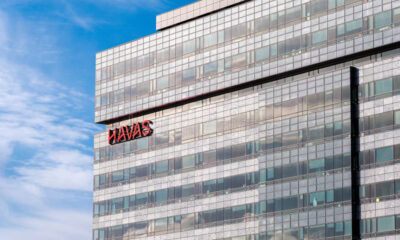
Havas snaps up Kaimera in down under power play

Published

on

SYDNEY: Havas is taking no prisoners in Australia and New Zealand. The Parisian advertising leviathan announced yesterday it has gobbled up Kaimera, a 50-strong independent media agency that has made its name untangling the Gordian knot of modern marketing. The deal marks Havas’s latest salvo in a deliberate campaign to dominate the antipodes—and it is not mincing words about it.

Founded in 2016, Kaimera has punched well above its weight, nabbing clients like Nando’s, Afterpay and BritBox whilst building outposts in Sydney, Melbourne and Auckland. Now it will operate as “Kaimera, a Havas Company”—a branding choice that suggests the parent firm is keen to preserve the scrappy entrepreneurial spirit that made the acquisition appetising in the first place.

The marriage makes strategic sense. Havas gets instant scale and specialist nous in a market it is desperate to crack. Kaimera gets the deep pockets and technological firepower of a global network that employs 23,000 people across 100 markets. The agency’s founders, Nick Behr and Trent McMillan, will report to James Wright, group chief executive of Havas ANZ, whilst staying put in their current digs in Surry Hills and South Melbourne—at least initially.

Advertisement

The real prize, though, is Converged.AI, Havas’s grandly named data-and-algorithms strategy that promises to fuse creativity, media and technology into one almighty offering. Kaimera’s integration is meant to accelerate the rollout of this operating system, giving clients “real-time, optimised, and personalised marketing solutions at scale.” Whether that is marketing waffle or genuine transformation remains to be seen.

The acquisition swells Havas ANZ’s headcount past 450 and comes hot on the heels of the network’s new “deliberately different” positioning—a cheeky pitch that it combines indie agility with big-network muscle. Havas’s chairman and chief executive Yannick Bolloré, called the deal proof of the group’s “very clear ambitions” in the region.

Behr, for his part, struck an optimistic tone. “We need to stay future-focused for our clients and our people, and Havas is the perfect partner for this next chapter,” he said. Translation: we have taken the money and are betting the corporate machinery will not crush what made us special.

Advertisement

If Havas can pull this off without smothering Kaimera’s maverick culture, it will have pulled off a rare trick in the graveyard of independent agencies swallowed by holding companies. If not, well, at least the founders will have a nice exit


Click to comment

Leave a Reply

Your email address will not be published. Required fields are marked *

AD Agencies

The smell that told Mumbaikars which station was next

Tata AIA turns Mumbai’s Parle-G memory into a sharp, city-wise outdoor play

Published

on

MUMBAI: When a biscuit factory became Mumbai’s unofficial station announcement. Long before smartphone maps and automated announcements, commuters on Mumbai’s Western line relied on their noses. As trains rolled into Vile Parle, compartments filled with the warm, sweet smell of baking biscuits from the Parle-G factory. It was a cue to gather bags, wake dozing children and shuffle towards the door.

Now that memory has been pressed into service by Tata AIA Life Insurance as part of its 25-year anniversary outdoor campaign — a city-by-city salute to the lived moments that shape urban life.

One hoarding, mounted close to the old factory site, reads: “We have been protecting Mumbaikars since Vile Parle smelled of freshly made biscuits.” Spare. Local. Loaded.

The broader campaign, rolled out across major metros, leans hard into contextual storytelling. In Kolkata, it nods to trams. In Pune, to Magarpatta’s transformation. In Bengaluru, to a time before IT parks. In Chennai, to OMR before it led to tech corridors. Each line anchors the brand’s longevity to a shared civic memory.

Advertisement

The Mumbai execution is the most evocative. For decades, the Parle-G factory was more than a production unit. It was a sensory landmark. Residents nearby set their clocks by the factory horn. Office-goers marked their commute by the waft of glucose and flour. When the plant shut, the city lost more than jobs. It lost a rhythm.

By placing the hoarding beside the former factory, the insurer collapses distance between copy and context. The site does half the storytelling. The rest comes from commuters who remember opening steel tiffins packed with Parle-G, or jolting awake as the train slowed.

It is a neat piece of brand positioning. Rather than trumpet balance sheets or policy counts, Tata AIA borrows emotional equity from the city itself. Twenty-five years becomes less a milestone and more a presence — steady, local, embedded.

Outdoor advertising is often a blunt instrument. This one is anything but. It whispers. It remembers. And in doing so, it sells trust without sounding like it is selling at all.

Advertisement

The scent may have faded. The memory has not.

Continue Reading

Advertisement News18
Advertisement All three Media
Advertisement Whtasapp
Advertisement Year Enders

Copyright © 2026 Indian Television Dot Com PVT LTD