MAM
TV personalities – good option for advertisers

MUMBAI: While speaking at the Advertising Club Bombay’s Value Creation seminar on marketing entertainment and their growing inter-dependence, creative consultant Rekha Nigam urged that advertising agencies must leverage TV personalities in a better way to sell products and services. She also added that the late 1990s marked a revolution in TV programming where Indian-ness came out of the closet. TV serials depicted the “Garv se kaho ham Bharatvasi hain” theme and India found its own voice on TV.
The following are the excerpts of Nigam’s presentation:
Where TV personalities score over film personalities:
 TV personalities score because their characters are more identifiable, trustworthy and viewers share an intimate bond with them on a weekly basis. Viewers connect to TV personalities easily because they see them more frequently. TV personalities get a consistent exposure and their characters become household names. However, viewers don’t know the real person (Amarr Upadhyay or Aman Varma) behind the character (Mihir) and often don’t even wish to know. TV personalities can sustain the interest of women viewers who identify strongly with them. TV characters don’t reinvent themselves as much as film personalities do. TV characters are aspirational in terms of the values they project on screen.
TV personalities are readily available and accessible to advertising agencies at cheaper and cost-effective rates. Viewers don’t have to pay much in order to view TV personalities as compared to film personalities.

Some of the TV personalities who were not leveraged were Lala Lahori Nath (Alok Nath in Hum Log); Karamchand (Pankaj Kapoor) and Shri Krishna (Nitish Bharadwaj in Mahabharata).
 Advertisers need to use TV personalities intelligently and match the synergies between a brand’s personalities and the TV characters. The advertisers need to understand the strengths and weaknesses of the TV characters – for instance Parvathi Babhi or Tulsi. Unlike film stars, it would not make sense to use the real person who portrays the character as viewers identify more with the on-screen characters. Advertisers could create little soap commercials. Advertisers must leveraging a TV character the moment the character is no longer part of the serial’s storyline and regular track the progress of the twists and turns of the story. Advertisers must look at short-term bursts rather than long-term usage.
India finds its voice in TV programming:
The success of wedding video film called Hum Aapke Hain Kaun in August 1994 propelled a wave of Indian-ness in both TV, advertising and cinema. It was hip to say “We are like this only” tom-tommed by a music channel. Zee TV also gave a place of pride to the game of Antakshari, that was never publicly played.
The biggest revolution for TV programming came in 2000 when both KBC (Kaun Banega Crorepati) and KSBKBT (Kyuunki Saas Bhi Kabhi Bahu Thi) were launched. Although KBC created a major hype and hoopla, KSBKBT’s silent advent ushered in a era that could determine the future course of TV programming. The serial put family to the centre-stage and capitalised on the fact that family bonding is the core of Indian-ness. The world of Indians revolves around the family irrespective of the part of the world in which Indians live.
As soon as the trend of family sit-coms started, movies and events started losing their sheen on the TRP charts. Asha Bhosale’s debut show on TV got the same TRPs as the afternoon repeat show of a popular family sitcom. The recent episodes of KSBKBT that showed a ‘bahu’ getting married to another son was more revolutionary than Yash Chopra’s film Lamhe that showed a girl getting attracted to a en elderly man.
TV is not a step-child for filmstars who have become spent forces but an opportunity for them to reinvent themselves. TV took on Amitabh Bachchan and returned him back to the film industry in a different avatar.
Also read
Need a hit – all about marketing and communication
Entertainment brands are illusory, elusive and magical – Star India COO Sameer Nair
Bollywood producers need specialised marcom agencies
Radio provides unique options to advertisers
Leo Entertainment capitalises on in-film product placements




MAM
Beacon Group appoints Dr Rajesh Patel as Group CEO
36-year healthcare veteran to lead Beacon Diagnostics, Vector Biotek, Biogeny.
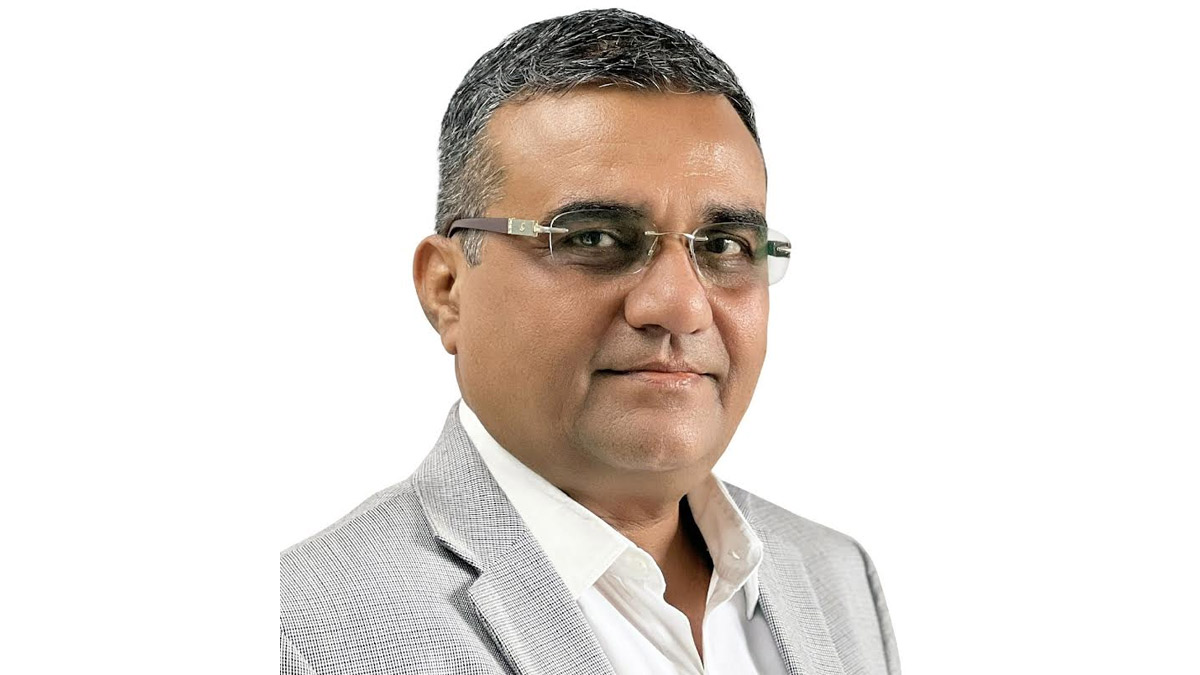
MUMBAI: A new chief, a fresh diagnosis and a sharper prescription for growth. Beacon Group has appointed Dr Rajesh Patel as its Group Chief Executive Officer, effective April 1, 2026, signalling a decisive push to scale its presence in the diagnostics and IVD space. Patel steps into the role with 36 years of experience across the healthcare and diagnostics industry, bringing a career shaped by leadership roles spanning sales, marketing, business development and operational strategy. His mandate is both expansive and precise: to steer the group’s overall strategic direction while tightening coordination across its three core entities Beacon Diagnostics, Vector Biotek and Biogeny Diagnostics.
In practical terms, that means driving cross-company synergies, accelerating market expansion and strengthening organisational capability areas increasingly critical as diagnostic players compete for scale in a fragmented yet rapidly evolving healthcare ecosystem. The group is positioning itself to capture unmet demand across chain laboratories, key accounts and standalone labs, segments that remain underserved despite growing diagnostic needs.
The appointment comes at a time when the In Vitro Diagnostics (IVD) sector in India is entering a more competitive and innovation-led phase, with companies focusing not just on product pipelines but also on service delivery, integration and customer-centric models. Beacon’s leadership appears to be betting that Patel’s execution-focused approach can help translate ambition into operational momentum.
Welcoming the appointment, Chairman Dr D K Joshi described Patel’s induction as a strategic move aligned with the group’s long-term vision, emphasising the role of leadership depth in navigating the next phase of growth.
For Beacon Group, the message is clear, in a sector where precision matters, leadership is the new differentiator—and this appointment is intended to set the tone for what comes next.






