News Headline
Trai’s draft suggestions on unified licensing regime

NEW DELHI: Telecom, broadcast and cable regulator, Telecom Regulatory Authority of India (Trai), has come out with its draft recommendation on ‘Unified Licensing Regime’ (ULR), which is likely to pave the way for liberalised regime in the information and communication technology (ICT) sector and encourage free growth of new applications and services leveraging on the technological developments.
In view of the impact that this policy document may have on the ICT industry, in a departure from usual practice, Trai has decided to consider the comments, if any, of stakeholders before submitting the recommendations to the government.
It may be recalled that the government had accepted Trai’s ULR recommendations, dated 27 October 2003. The recommendations envisaged a two-stage process to introduce a unified licensing regime in the country. The first phase that entails a unified access service license at circle
level has already been implemented.

The key objective of the unified licensing/authorisation regime is to encourage free growth of new applications and services leveraging on the technological developments in the ICT area. Other main objectives of the ULR are to simplify the procedure of licensing in the telecom sector, ensure flexibility and efficient utilisation of resources, keeping in mind the technological developments, encourage efficient small operators to cover niche areas in particular rural, remote and
telecommunication-facilities-wise less developed areas and to ensure easy entry, level playing field and ??no- worse off?¦ situation for existing operators.
The salient features of Trai’s recommendations are as follows:
* There shall be three categories of licenses;
(1) Unified License where all public networks including switched networks, irrespective of media and technology, capable of offering voice and/or non-voice (data services)
including Internet telephony shall be covered under this category
(2) Class license where all services including satellite services which do not have both way connectivity with Public network shall be covered under Class license. This category excludes Radio Paging and PMRTS Services and includes Niche Operators. (The concept of niche operators is being included to promote growth of telecom services in rural / remote / backward areas from teledensity point of view
(3) Licensing through authorisation where the category will cover the services for provision of passive infrastructure and
bandwidth services to service provider(s), radio paging, PMRTS and Internet services, including existing restricted Internet telephony (PC to PC, SIP device to SIP devise using lease line only and PC to phones-phones outside India only) but not Internet telephony, in general.
* This licensing framework shall be hierarchical in nature with unified license being at the highest hierarchical level. Such a licensing regime would enable a licensee to provide any or all telecom services by acquiring a single license.
* The amount of registration charge for unified license will decrease to Rs 30 lakhs by the fifth year.
* The Government may consider reviewing universal service obligation (USO) policy to reduce USO contribution as well as administrative cost in terms of percentage of AGR. The issues related to USO including contribution to USO and scope shall be dealt with separately through a consultation process.
* In the new licensing Regime there shall be no restriction on usage of Internet telephony or other IP enabled services provided they are offered by operators with Unified License who have duly paid registration charges of NLD and UASL and who will be subjected to license fees. In the interest of security, suitable monitoring equipment as may be prescribed will be provided by the licensee for monitoring as and when required by the licensor.
* Migration to ULR will be optional at this stage. However, after a period of five years when there shall be a nominal registration charge (entry fee of Rs 30 lakhs). It shall be mandatory for all telecom operators to migrate to ULR. All new service providers shall be licensed under new ULR.






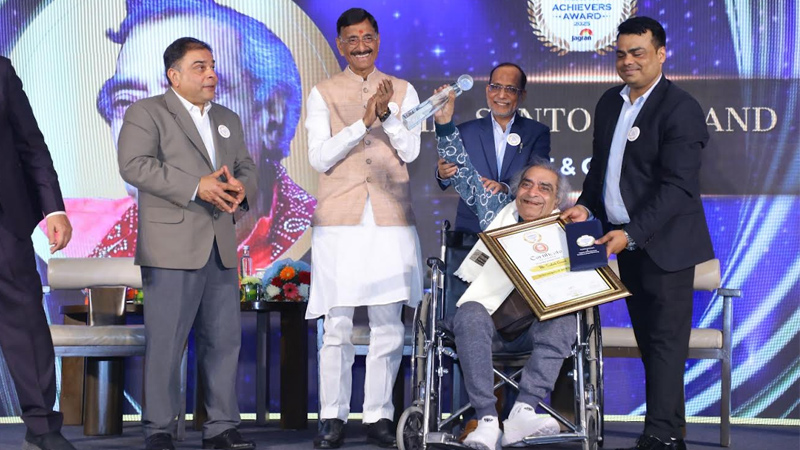
NEW DELHI: Hamdard Laboratories gathered a cross-section of India’s achievers in New Delhi on Friday, handing out the Hakeem Abdul Hameed Excellence Awards to figures who have left their mark across healthcare, education, sport, public service and the arts.
The ceremony, attended by minister of state for defence Sanjay Seth and senior officials from the ministry of Ayush, celebrated individuals whose work blends professional success with a sense of public purpose. It was as much a roll call of achievement as it was a reminder that influence is not measured only in profits or podiums, but in people reached and lives improved.
Among the headline awardees was Alakh Pandey, founder and chief executive of PhysicsWallah, recognised for turning affordable digital learning into a mass movement. On the sporting front, Arjuna Awardee and kabaddi player Sakshi Puniya was honoured for her contribution to the game and for pushing women’s participation onto bigger stages.
The cultural spotlight fell on veteran lyricist and poet Santosh Anand, whose songs have echoed across generations of Hindi cinema. At 97, Anand accepted the honour with characteristic humility, reflecting on a life shaped by perseverance and hope.
Healthcare honours spanned both modern and traditional systems. Manoj N. Nesari was recognised for strengthening Ayurveda’s place in national and global health frameworks. Padma shri Mohammed Abdul Waheed was honoured for his research-backed work in Unani medicine, while padma shri Mohsin Wali received recognition for his long-standing contribution to patient-centred care.
Education and social development also featured prominently. Padma shri Zahir Ishaq Kazi was honoured for decades of work in education, while former Meghalaya superintendent of Police T. C. Chacko was recognised for public service. Goonj founder Anshu Gupta received an award for his dignity-centred rural development initiatives, and the Hunar Shakti Foundation was honoured for empowering women and young girls through skill development.
The Lifetime Achievement Award went to former IAS officer Shailaja Chandra for her long career in public healthcare and governance, particularly in the traditional systems under Ayush.
Speaking at the event, Hamdard chairman Abdul Majeed said the awards were a tribute to those who combine excellence with empathy. “These awardees reflect Hakeem Sahib’s belief that healthcare, education and public service must ultimately serve humanity,” he said.
Minister Seth struck a forward-looking note, saying India’s young population gives the country a unique opportunity to become a global destination for learning, health and wellness by 2047.
The ceremony also featured the trailer launch of Unani Ki Kahaani, an upcoming documentary starring actor Jim Sarbh, set to premiere on Discovery on 11 February.
Instituted in memory of Unani scholar and educationist Hakeem Abdul Hameed, the awards have grown into a national platform that celebrates those building a more inclusive and resilient India. For one evening at least, the spotlight was not just on success, but on service with substance.






