MAM
JWT strengthens Ford relationship with new appointment, promotion

MUMBAI: With a view to strengthen it’s 62 year relationship with Ford Motor Co., JWT Worldwide CEO and chairman Bob Jeffrey announced two executive moves – that of George S Rogers and Doug Molloy.
Rogers, an automotive advertising veteran, has been named co-president of JWT Detroit, a role in which he will oversee the agency’s US relationship with its largest client, Ford.
Rogers will share leadership responsibilities for the office and its accounts with Tom Cordner, who also holds the title of JWT Detroit CO-president and is the Worldwide creative director on Ford.

Additionally, Molloy, who has touched nearly every aspect of the Ford account over his 29-year tenure at JWT, has been promoted to international business director, Ford, a post in which he will be responsible for all of JWT’s Ford business outside of the US.
Molloy will free Rogers to focus on Ford US and JWT Detroit’s other clients, including Domino’s, Bosch, Shell, White Castle, Delta Dental and Great Lakes Crossing.
Rogers, who will become a member of JWT’s Worldwide Executive Committee, will report to Jeffrey, and Molloy will report to JWT Worldwide president Michael Maedel.
“Over the years, our business with Ford has grown so elaborate and has presented so many opportunities, it deserves single-minded leadership in both the US and internationally. George’s extensive and highly regarded auto experience and Doug’s multi-faceted, distinguished tenure at JWT are a winning combination that is sure to expand the breadth and depth of our relationship with Ford on a worldwide basis. These moves are a part of our drive to secure top-notch talent, who will grow and evolve our most important client relationships,” said Jeffrey.
For the past eight years, Rogers was at Wenham, Mass-based Mullen, where he rose from senior vice president to executive vice president, group director. There, he managed the shop’s Detroit office and its relationship with General Motors, as well as oversaw its XM Satellite Radio, Stanley Works and the US Department of Defense accounts.
“George’s credentials are exactly what we sought for our Detroit office. Under his leadership, his teams have produced not only famous, but effective work for large complex clients. He is well respected by his creative partners, who point to his excellent sensibilities and embrace of big ideas. Most importantly, he has a track record of innovation in marketing communications and knack for building businesses and brands in tune with the future,” explains Jeffrey.
“This is a dream scenario for me. I look forward to partnering with Bob, Tom and my new team to work smart to build Ford’s brands domestically and to grow JWT’s presence in Detroit, already the city’s biggest and most vibrant agency and a genuine force in the Midwest. I love the car business and marketing communications, so what could be better than a job that marries these two passions?,” added Rogers, who will relocate to Michigan this summer.
Cordner added, “George is part of a master plan to move all our clients to the next level in communications. He thoroughly embraces change and understands the need to create ideas that people want to spend more time with.”
Molloy, who will continue to be based in Singapore, has spent the past two years supporting all of JWT’s Ford and Mazda business outside of North America as international vice president, senior executive management director, Ford International.
Prior to that, he was senior partner, executive management director, Ford International for four years. Since joining JWT Detroit in 1976, Molloy has worked on numerous award-winning new product launches in various countries, and spearheaded the expansion of JWT’s Ford business throughout all of Asia.
“Doug is a consummate professional, who knows the Ford business inside and out. We are always benefiting from his wealth of knowledge and expertise in everything automotive,” said Jeffrey.



Brands
Pocket FM elevates Lalit Gangwar to COO to drive global growth
Founding member to lead operations, monetisation and expansion across markets
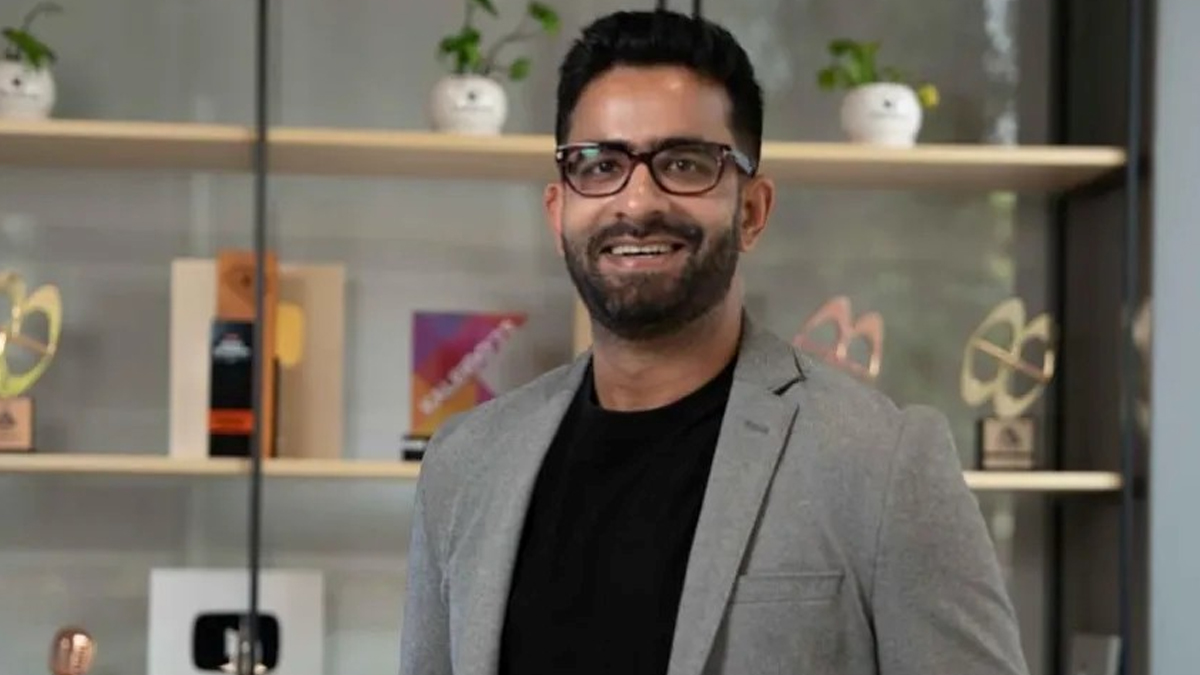
MUMBAI: Pocket FM has elevated Lalit Gangwar to chief operating officer, tasking the founding team member with leading global business operations as the company sharpens its international growth strategy.
In his new role, Gangwar will oversee end-to-end operations across markets, including growth, monetisation and execution for the company’s audio business. The appointment comes as Pocket FM looks to strengthen its operating foundation and build a more predictable, scalable global business.
Gangwar has been closely involved in shaping the company’s trajectory from its early days. He played a key role in building the growth and marketing playbook in India, helping the platform scale to over 150 million users within its first year and establish a strong foothold in the audio storytelling category.
He later led Pocket FM’s expansion into the United States, where he set up teams, defined market strategy and drove scale, contributing significantly to the company’s international ambitions.
Pocket FM co-founder and CEO Rohan Nayak said, “Lalit has been central to Pocket FM’s journey from the very beginning. He has built our growth engine and scaled our business across markets.” He added that the company’s focus on nurturing internal talent makes Gangwar a natural choice to lead the next phase.
Gangwar said, “Pocket FM has always been driven by a simple belief that powerful stories can travel across borders and create meaningful impact.” He noted that the company will continue to focus on scaling markets, investing in AI-led storytelling and strengthening monetisation.
As COO, Gangwar is expected to bring greater operating discipline while building systems, talent and processes to support long-term growth.
With leadership continuity and a clear global focus, Pocket FM appears to be turning the page to its next chapter, one that aims to take its storytelling playbook well beyond home turf.