Digital
ASCI proposes draft guidelines for environmental claims in advertising


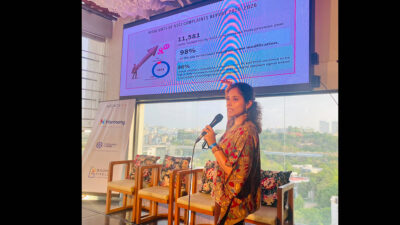
Mumbai: The Advertising Standards Council of India (ASCI) takes a pivotal stride towards enhancing transparency and accountability in environmental advertising through the unveiling of comprehensive draft guidelines on “Environmental/Green Claims.” The draft guidelines are open for public feedback until the 31st of December 2023, post which they will be finalised. Developed by a multi-stakeholder task force, including environmental experts, these guidelines aim to ensure that advertisements are free from greenwashing practices. The draft guidelines establish a clear framework for advertisers to present truthful and evidence-based environmental claims.
Environmental claims include claims that suggest or create an impression that a product or a service has a neutral or positive impact on the environment, is less damaging to the environment than a previous version of the same product or service or a competitive product, or has specific environmental benefits.
Environmental/Green claims can be explicit or implicit. They can appear in advertisements, marketing material, branding (including business and trading names), on packaging or in other information provided to consumers.
The draft guidelines target greenwashing – the deceptive practice of making misleading environmental claims. ASCI emphasizes the paramount importance of substantiated, comparable, and verifiable claims to combat misinformation. In its ad-surveillance ASCI has found that several terms are loosely used to communicate environmental benefits, giving an impression that the product is greener than it actually is.
PROPOSED GUIDELINES:
1 Absolute claims such as but not limited to “environment friendly”, “eco-friendly”, “sustainable”, “planet friendly” that imply that the product advertised has no impact or only a positive impact must be supported by a high level of substantiation. Comparative claims such as “greener” or “friendlier” can be justified, for example, if the advertised product or service provides a total environmental benefit over that of the advertiser’s previous product or service or competitor products or services and the basis of such comparison is made clear.
2 Environmental claims must be based on the full life cycle of the advertised product or service, unless the advertisement states otherwise, and must make clear the limits of the life cycle. If a general claim cannot be justified, a more limited claim about specific aspects of a product or service might be justifiable. Claims that are based on only part of an advertised product or service’s life cycle must not mislead consumers about the product or service’s total environmental impact.
3 Unless it is clear from the context, an environmental claim should specify whether it refers to the product, the product’s packaging, a service, or just to a portion of the product, package, or service.
4 Advertisements must not mislead consumers about the environmental benefit that a product or service offers by highlighting the absence of an environmentally damaging ingredient if that ingredient is not usually found in competing products or services by highlighting an environmental benefit that results from a legal obligation if competing products are subject to the same requirements.
5 Certifications and Seals of Approval should make clear which attributes of the product or service have been evaluated by the certifier, and the basis of such certification provided. Certifications and Seals used in an advertisement should be from a Nationally/Internationally recognised certifying authority.
6 Visual elements in an ad should not give a false impression about the product/service being advertised. For example, logos representing a recycling process on packaging and/or in advertising material can significantly influence a consumer’s impression of the environmental impact of a product or service.
7 Advertisers should refrain from making aspirational claims about future environmental objectives unless they have developed clear and actionable plans detailing how those objectives will be achieved.
8 For carbon offset claims advertisers should clearly and prominently disclose if the carbon offset represents emission reductions that will not occur for two years or longer. Ads should not claim directly or by implication that a carbon offset represents an emission reduction if the reduction, or the activity that caused the reduction, was required by law.
9 For claims pertaining to the product being compostable, biodegradable, recyclable, non-toxic, free-of etc. advertisers should qualify the aspects to which such claims are being attributed, and the extent of the same. All such claims should have competent and reliable scientific evidence to show that:
a The product or the qualified component where applicable will break down within a reasonably short period of time after customary disposal.
b The product is free of elements that can lead to environmental hazards.
ASCI CEO & secretary general Manisha Kapoor said, “ASCI’s draft guidelines on Environmental/Green Claims are a crucial step to ensure that consumers who wish to support green brands have the correct information to make an informed decision. These guidelines set a standard for advertisers, and aim to foster a culture of transparency and authenticity in advertising in the best interest of the consumers. We encourage all stakeholders, including consumers, industry, civil society members, and experts, to provide their feedback on the draft guidelines to enable us to sharpen and strengthen them.”