MAM
TBU appoints Ashutosh Karkhanis as creative director


MUMBAI: Brand consultancy, The Brand Union (TBU), has appointed Ashutosh Karkhanis as creative director.
Karkhanis moves in from Rediffusion-Y&R’s digital and design arm Rediffusion WHO!, from where he resigned last month as national creative director, design and digital.
In 2006, WPP acquired a majority stake in Ray+Keshavan (R+K), India‘s first graphic design consultancy. Consequently, the Bangalore-based firm became a part of WPP’s design conglomerate and brand consulting firm, TBU.

In his new role at TBU, Karkhanis will report to MD and executive creative director Sujata Keshavan.
Karkhanis’ 18-year career began with Lintas Bangalore as trainee visualiser. After four years, he moved to Enterprise Mumbai and a year later joined Euro RCSG as senior art director. Two years later, Karkhanis joined JWT‘s Kenya outfit, Thompson Kenya.
After spending less than a year in Nairobi, Karkhanis moved back to Mumbai and started working with Ambience as associate creative director, before moving to Grey a year later and working there for two-and-a-half-years.
Karkhanis also worked at Quadrant Communications and Contract Advertising before joining Rediffusion as creative head in 2007.

MAM
G-Shock launches GA-2100CM series with camouflage design
New sand and grey variants priced at Rs 10,995 each in India.
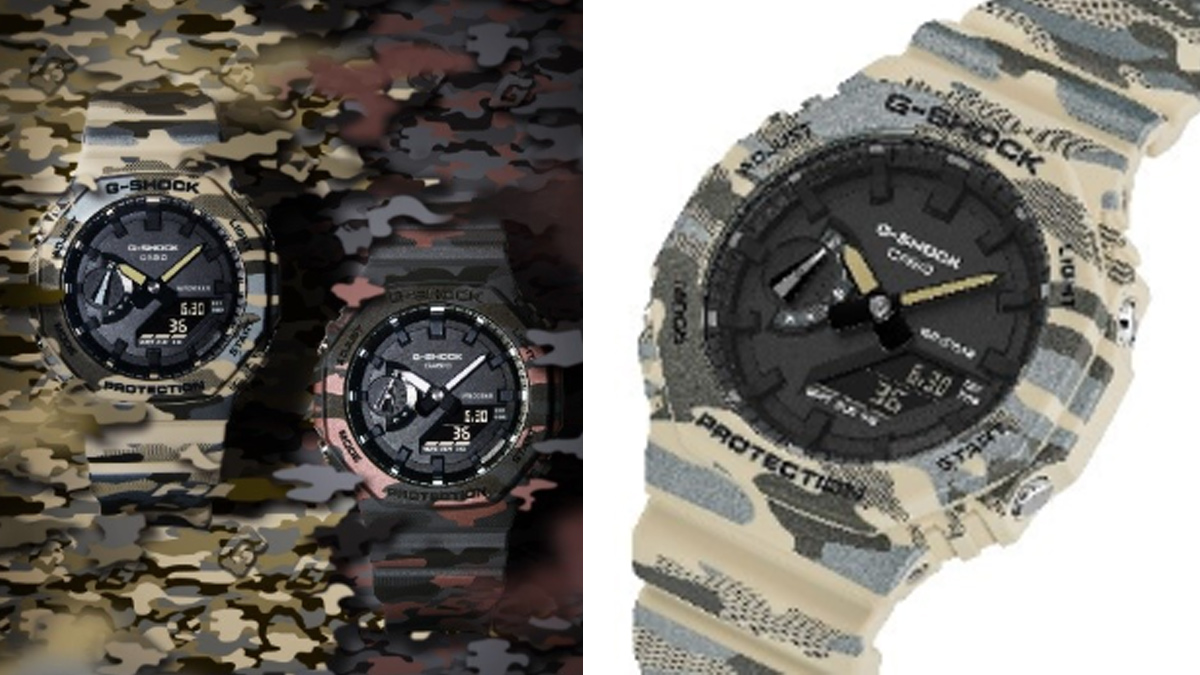
MUMBAI: Time just got a little more tactical and a lot more stylish. G-Shock has unveiled the GA-2100CM series, a fresh update to its popular GA-2100 line, bringing a camouflage twist to one of its most recognisable silhouettes. For the first time in the 2100 series, the watches feature G-Shock’s original camouflage pattern, subtly embedding the brand’s signature ‘G’ motif into the design. The move signals a shift towards more design-led storytelling, blending rugged functionality with fashion-forward detailing.
The new series introduces two colour variants sand (GA-2100CM-5A) and grey (GA-2100CM-8A) extending the model’s appeal across both streetwear and outdoor-inspired aesthetics. Built around the brand’s signature octagonal bezel and hybrid analogue-digital display, the watches retain a clean, modern look while adding layered visual depth.
Under the hood, the GA-2100CM continues to lean on performance. It features the Carbon Core Guard structure for durability, while maintaining a slim, lightweight profile suited for everyday wear. Functional elements include world time across 31 time zones, a 1/100-second stopwatch, countdown timer, LED light and 200-metre water resistance.
In line with evolving material choices, select components use bio-based resin, pointing to a gradual shift towards more sustainable design without compromising on toughness.
Priced at Rs 10,995, the GA-2100CM series is available across Casio India stores and online platforms.
As watch brands continue to balance utility with identity, G-Shock’s latest drop makes its intent clear, durability may be the legacy, but design is the new frontier.