MAM
DDB Mudra completes last leg of restructuring
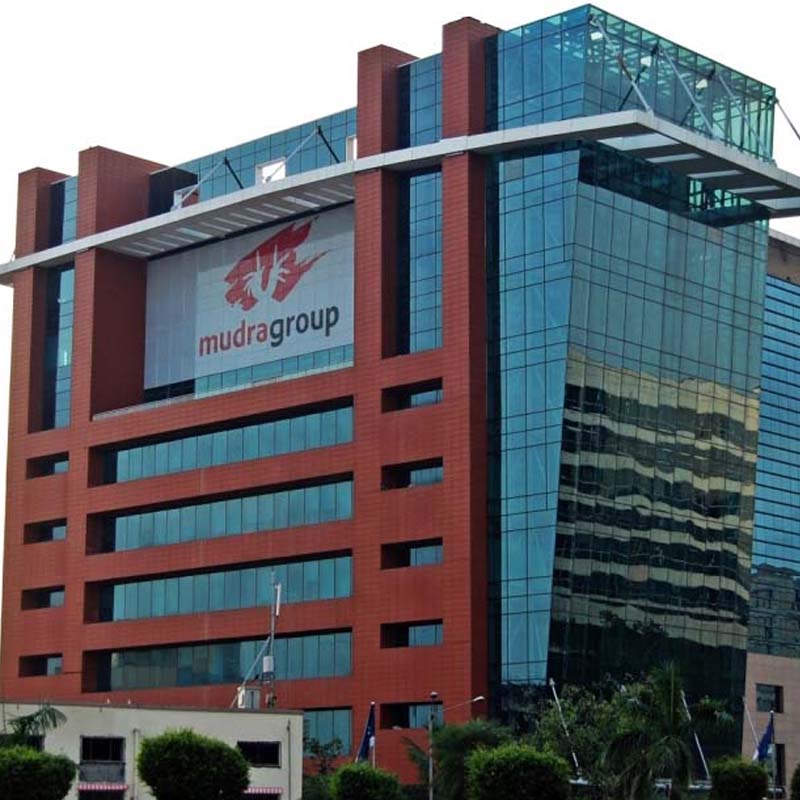
MUMBAI: DDB Mudra has completed the last leg of its restructuring, a process that started in November 2011 after Omnicom took majority stake in the Anil Ambani-owned company.
The senior level changes include Arijit Ray who will now work on a new assignment in the DDB Asia-Pacific network while Sudarshan Banerjee will serve as director business development in the DDB Mudra Group in addition to his role as head Mudra Ahmedabad. Ray was president Mudra West till now.
Banerjee will report to Pratap Bose who is group CEO.
Also, Anurag Bansal will now serve as director finance in the DDB Mudra Group and be the deputy to the group chief financial officer Dilip Upadhyaya.
At the beginning of 2012 Mudra had announced the joining of Vandana Das as head of its North operations while Rajiv Sabnis was given the reins to head the West operations. Ranji Cherian continued to head the southern operations.
Sabnis and Cherian will also be involved in initiating integration projects and business for DDB MudraMax from the existing clients within DDB Mudra and Mudra in their respective regions.
DDB Mudra will announce its new identity on 28 February. The effective date for the makeover is 1 March.

AD Agencies
Omnicom Q4: Posts big revenue gains amid restructuring
Company trims underperforming units and launches $5B share buyback to reward investors.
MUMBAI: Omnicom has decided that in the world of global advertising, it is better to be a big fish in an even bigger pond. The marketing powerhouse, which recently swallowed its rival IPG, has kicked off 2026 by showing the market that it is not just buying growth – it is engineering it. In a series of bold strategic manoeuvres, the group has doubled its projected cost-savings target to a whopping $1.5 billion over the next three years.
The fourth-quarter results for 2025, released on 18 February 2026, paint a picture of a company in the midst of a massive structural makeover. Reported revenue for the quarter shot up 27.9 per cent to $5,528.8 million, a figure heavily bolstered by the first full month of IPG’s operations under the Omnicom umbrella. For the full year, revenue reached $17,271.9 million, marking a 10.1 per cent increase as the company integrated heavyweights like Acxiom Real iD and Flywheel Commerce Cloud into its next generation Omni platform.
However, bigger does not always mean tidier. The group reported a Gaap net loss of $941.1 million for the final quarter, or $4.02 per diluted share. This was primarily due to a massive $1.1 billion bill for severance and real estate repositioning, alongside a $543.4 million loss on the sale of non-strategic businesses. When these one-off integration headaches are stripped away, the underlying performance looks far more robust, with adjusted net income reaching $607.7 million and earnings per share of $2.59, comfortably ahead of the prior year’s $2.41.
The group is also trimming the fat elsewhere. Management has identified underperforming and non-strategic units representing approximately $2.5 billion in revenue for exit or sale. Meanwhile, smaller majority-owned markets bringing in $700 million are being moved to minority positions. This portfolio pruning is designed to focus the New Omnicom on higher-growth areas like media, creative content, and data-driven consulting.
Investors, it seems, are being kept sweet with a significant return of capital. The board has approved a fresh $5 billion share repurchase program, initiating an immediate $2.5 billion accelerated buyback. This comes on top of $549.6 million paid out in common dividends during the year.
Performance across the sectors was a mixed bag but generally positive in the heavy-hitting divisions. Media and advertising revenue surged 34.4 per cent in the fourth quarter to $3,322.6 million, while public relations grew 12.4 per cent to $500.8 million. On the flip side, branding and retail commerce saw a 7.0 per cent dip. Regionally, the US remains the engine room, with revenue jumping 51.9 per cent to $2,869.1 million in the quarter, while the UK saw a respectable 18.8 per cent rise to $533.2 million.
With a total debt of $9.1 billion following the IPG acquisition, the group is leaning on its cash-generative nature to keep its investment-grade credit rating intact. Free cash flow for the year stood at $2,226.1 million, up from $1,964.7 million in 2024. As the company moves into 2026, the focus is firmly on the Connected Capability model, essentially ensuring that its global army of talent is pulling in the same direction, and more importantly, within a much leaner budget.