GECs
Hit at the box office, flop on TV

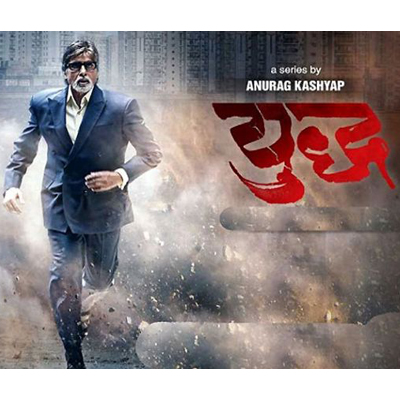
From Anurag Kashyap’s Yudh for Sony Entertainment Television (SET), Ashutosh Gowariker’s Everest on Star Plus, Vipul Amrutlal Shah with Pukaar – Call For The Hero on Life OK, Anil Kapoor’s 24 to Sanjay Leela Bhansali’s Saraswatichandra on Star Plus, the small screen has always welcomed big filmmakers with open arms. However, it is a different story that not many of them have been able to make a mark on television.
Despite having deep pockets, the crowned kings of weekend box office, somehow fail to rule weekdays on television. Moreover, these were not your “typical Indian daily soaps.” With oodles of star power and mammoth production budgets, these shows took programming on Indian television to a different level.
Producers are now pumping in more money in daily soaps, be it for grander sets, better special effects or skilled writers and directors. For instance, each of these episodes costs upwards of Rs 1.25 crore as compared to the normal budget of Rs 6-8 lakh for 30 minutes of fiction.
Moreover, these handful of shows are attempting to push the fiction envelope in the Rs 43,000-crore Indian television industry today.
Unfortunately, the production cost incurred by these shows fails to justify the visibility the shows garner.
Let’s start with Yudh. This was one of the most talked-about shows of 2014 with Bollywood megastar Amitabh Bachchan making his television fiction debut on Sony. The show ran for four weeks, with five episodes a week. The estimated cost of the show, per episode, was around Rs 3 crore. While the channel promoted the property extensively, the buzz hit the rocks when it clocked an average of 1,199 TVTs in its opening week. The industry termed it as ‘dark’ content for the 10 pm slot on Indian television.

Similarly, Bhansali’s Saraswatichandra spent close to Rs 12 lakh per episode, little higher than what a fiction daily soap would spend. Though it started on a good note with 5,730 TVTs, it later lost track and the numbers fell drastically.
After Bhansali, Star Plus brought Bollywood filmmaker Gowariker back to the small screen with Everest. Touted as one of the most expensive fiction shows, it was shot at locations like Nepal, Uttarakhand and the Dokriani glacier. With technical equipments like GoPro cameras, 4K technology etc, the production cost per episode was around Rs 35 lakh. The channel had pinned high hopes on the show but it failed to generate ratings as expected. It registered 2,845 TVTs in its opening week.
Another show with a different perspective titled Pukaar had men as the main protagonists. Based on a story with an army background, it saw filmmaker Vipul Shah making his debut on television. Close to Rs 13 lakh had been spent per episode on production. Needless to say that Pukaar failed to call in the audience.
While more often than not they’re armed with a magic formula for success on the big screen, why do these filmmakers’ high-budget television stint fail to bring in viewers?
Indiantelevision.com spoke to industry experts to know whether Bollywood biggies have simply lost their way or have audiences grown tired of their particular brand of filmmaking?
Media planners feel that no matter how much money a maker puts in, if the content doesn’t reflect the taste and preferences of Indian viewers, the show is bound to flop.
Helios Media managing director Divya Radhakrishnan opines that television and movies are very different mediums. “In a movie, you get two hours to tell your story and a maker knows how to build it section by section. Television is 22 minutes in and out. How you can link the 22 minutes and have a 24-hour gap before you come up with next 22 minutes is important. So, there is a different knack of doing television, which is very different from movies,” she says.

Similarly, Radhakrishnan believes that television makers can’t do movies. “Look at the mindset, for instance, from a hijack sequence in Diya Aur Baati Hum to a wedding scene in Yeh Rishta Kya Kehlata Hai, a viewer’s mindset is changing constantly. Assuming that a person is watching Star Plus end-to-end, this is the kind of graph that goes on television. However when you are watching a movie, a viewer, right from the first minute to the end of the three hours, is fully in tune with the character. Movie format is very different from that of television.”
Another observer feels that film producers are so oriented towards movie making that they have to re-orient themselves for television, which is very difficult for someone of creative caliber like Gowariker, Bhansali etc.
“It’s not about a show doing well or not doing well, but when BARC rollout happens, the benchmarks are going to change. The mindset of a Baalika Vadhu viewer will be different from that of a Yudh viewer,” adds Radhakrishnan.
Concurring with Radhakrishnan, a media analyst feels that the grammar of storytelling on television is different from films. “On the big screen, filmmakers have support of huge stars, which is one reason for the film doing well. On TV, big filmmakers will definitely have the money to pump in but no big stars, which can back them up with the content they deliver. Shooting at exotic locations and increasing production cost are not necessarily recipes of good content.”
Argue that Yudh failed to make an impact on viewers despite having probably the biggest star there ever has been in Bachchan and the burden of failure immediately falls on the frail shoulders of content, which invariably is king.
Another point to factor in here is the crew that works on the production. A media analyst feels that by getting the crew that works on films will not necessarily work on television. “The way creative people think for movies and television is way different. You can’t get the same set of film people to write or direct for television,” the analyst opined.
From a purely demand and supply point of view, mainstream watchers do not look for intellectual content after a day full of hardship. “They just want entertainment, which Yudh failed to deliver,” opines a top executive of a production house. “After full day of work, who would want to watch ‘dark’ content? What one needs is good content, which can de-stress the mind.”
Another observer believes that in the US, TV series form a substantial market for various studios, and it is taken quite seriously by all participants like studio, writers, producers, director, actors and the audience. “In India, the television industry is yet to achieve that status. For this to happen, the content and formats on Indian television needs to witness a sea change.”

While one has caught a glimpse of this change wherein big-budget shows like 24, Bigg Boss, Satyamev Jayate and Mahabharat have worked, the fact remains that such shows are far and few. A media planner says, “Why is it that these high-budget shows worked on television? It is because the content directly clicked with the audiences as the makers understood what the audience of today wants.”
Offering a different take, a Hindi general entertainment channel (GEC) executive says, “The target audience for most Indian TV shows is households that don’t prefer watching anything sophisticated but only the typical serials. For many years, saas-bahu serials, in which Ekta Kapoor thrived, ruled the roost. Over the years, many other themes opened up like dance, music competitions, historical serials etc. However, in all these the inherent style remains the same, just the setting changes.”
How important is time slot for the success or failure of shows? To this, Radhakrishnan says, “People chase good content. For instance, last year Colors filled up the 9-10 pm slot with two shows Beintehaa and Rangrasiya, which did average in numbers and less in viewership. Why didn’t these shows work in the primetime slot? However, now the channel airs Ashoka Samrat in the same time slot. The show has a very strong base and so it’s doing well. At the end of the day, it’s all about having good content.”
A trait that people lack today is patience. Radhakrishnan argues that people are not patient nowadays and will go wherever they find content that appeals to them. It boils down to the game of content and the appeal it brings to the table. “Otherwise Saath Nibhana Saathiya at 6.30 pm and Yeh Hai Mohabattein at 11 pm wouldn’t be the top rated programmes in the genre. Similarly, Diya Aur Baati Hum for a very long time was the top rated show on the TAM TV ratings chart. However, the last four weeks had a different story to tell when the numbers dropped drastically with the show losing its numero uno position. Thus, to get the audiences back, the show took a generation leap to bring it back on track. In the interim, KumKum Bhagya of Zee has become number one.”
High production budget and big names don’t necessarily result in getting the eyeballs. So while Karan Johar may produce a show tomorrow starring Shah Rukh Khan and Katrina Kaif, if the content is not strong enough, be rest assured that the viewer is not going to lap it up.