MAM
CES 2016: Technology is enabling a super-connected consumer journey

MUMBAI: Advances in data-driven technology are creating the foundations for a super-connected consumer journey, offering marketers new opportunities to create powerful, seamlessly integrated brand experiences. This is ZenithOptimedia’s key insight from the Consumer Electronics Show (CES) 2016.
At this year’s CES, a multitude of new technology was being exhibited, and while there was huge variety in terms of form and function, a common thread was apparent: the sophisticated use of data in order to provide utility or entertainment for consumers. And many of the tech companies developing these new types of technology were taking time to explain to delegates how their products and services took their place in the emerging, highly-connected technological ecosystem.

The Internet of Things promises a wealth of new data connection points, with each technology platform or application playing its part in creating a new highly-connected consumer journey, mapped out with engaging experiences and time-saving functionality.
This new highly-connected consumer journey starts with the mobile consumer, and there was an array of new devices on display at CES to enable mobility and to satisfy the needs of the mobile consumer. Once again, wearable devices – that connect online and are linked to other platforms and devices – where everywhere at CES. Of note, Fossil announced that it is rolling out 100 connected devices this year. Many of the wearables were focused on health and fitness. For example, Huawei’s Honor Band Z1 helps you track your fitness, performing tasks such as counting your steps and keeping a record of how you sleep.
The car will become an increasingly important platform in the new connected consumer journey. Several hi-tech connected cars were unveiled this year. VW unveiled two connected and all-electric concept cars of the future: the e-Golf Touch and the Budd-e microbus, which will perform functions such as letting you know if a visitor is at the front of your house or what’s in your fridge. BMW’s Open Mobility Cloud is a true vision of the car’s rightful place in The Internet of Things. BMW’s new technology shows how the car can be seamlessly integrated into the connected home, enabling the driver to control things such as lighting, heating and appliances from within the car.
Toyota announced at CES that it was stepping up its Toyota Research Institute efforts to develop artificial intelligence that can help cars communicate with each other without human interaction. It also displayed some of its new concept cars that are powered by Hydrogen. And Mercedes-Benz showed off its brand new Touch Pad steering wheel mounted sensors that allow the driver to effortlessly toggle through menu options for two HD screens.
The ‘connected home’ is central to the Internet of Things and will play a key role in the integrated experiences brands can offer consumers. A wealth of new smart and connected household appliances were on display at CES, such as Samsung’s new Family Hub fridge, and Whirlpool’s new Smart Washer and Dryer, which integrates Amazon Dash functionality to enable easy, automatic restocking. The development of the Internet of Things means that the home has been identified as a new battleground, and the data collected by our household purchases and our conversations with our devices will be just as valuable as data collected from the Internet. So, Google’s Nest and its Weave platform is now in direct competition with Amazon and its Alexa platform.
In terms of the ‘connected home’, arguably the most important – and talked about – announcement at CES this year came from Netflix, which is adding 130 countries to its streaming service, making it available all around the world. This is a huge step by Netflix as it looks to become the dominant global internet TV service.
Robotics will play an increasingly important part in the automated home and in connecting consumer experiences. There were more robots on display at CES this year than ever before. There was much hype about Segway’s partnership with Intel to create a hoverboard butler. And Double Robotics has brought out a new version of its telepresence robot – an iPad incorporated into a mobile robot which live streams back to the user.
And, critical to the success for brands in this new highly connected consumer journey will be having the payment facilities that best meet the needs of the mobile consumer. Mobile payment will play a key role in converting seamless consumer experiences into sales. Samsung used CES this year to announce that its Samsung Pay facility, currently available in South Korea and the US, would be launching in Australia, Singapore and Brazil. And Coin announced that it is teaming up with MasterCard to help companies integrate mobile payment into their wearable devices.
ZenithOptimedia chief digital officer Stefan Bardega said, “Many of the exciting technology products and solutions on display at CES this year indicate that we are on the verge of new era of highly connected consumer experiences, fuelled by data and empowered by the Internet of Things. In some instances, companies from different industries are now working collaboratively to develop new technologies and to drive connectivity. All of this is good news for marketers looking to create valuable brand experiences that deliver ROI.”





MAM
Bob Iger joins Thrive Capital as adviser after Disney exit
Former Disney CEO returns to VC firm, stays on as Disney adviser till 2026.
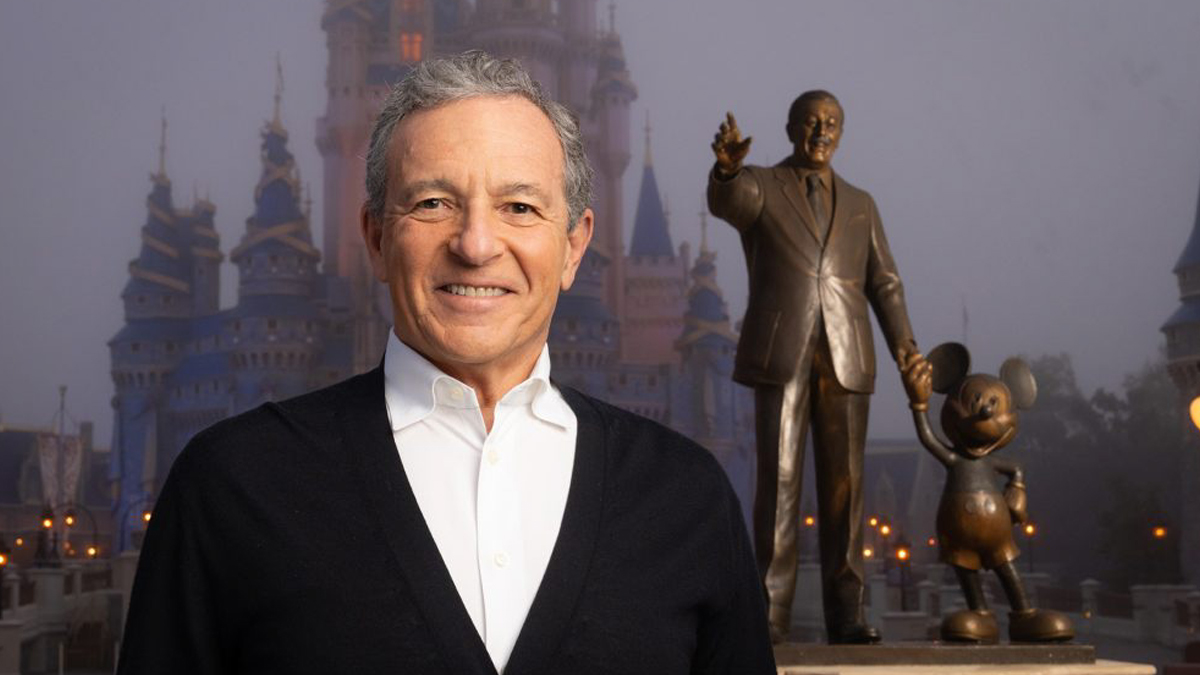
MUMBAI: From castles to capital, Bob Iger isn’t done building just changing the blueprint. Bob Iger has taken on an advisory role at Thrive Capital, marking a return to the New York-based venture firm he briefly joined in 2022. Founded in 2009 by Josh Kushner, Thrive Capital has been positioning itself at the intersection of technology and long-term value creation, an area where Iger’s experience in scaling global entertainment businesses is expected to add weight. Kushner, 40, welcomed Iger back, highlighting his ability to blend technology with human-centric storytelling, particularly in an era increasingly shaped by artificial intelligence.
Iger is no stranger to Thrive. He had earlier joined the firm as a venture partner in September 2022, after stepping down as CEO of The Walt Disney Company and concluding his tenure as executive chairman in 2021. That stint, however, was short-lived. In November 2022, Disney’s board brought him back to steady the ship, replacing Bob Chapek following a turbulent period for the company.
Now, with his latest exit from Disney’s top job last month, Iger appears to be revisiting the venture world, this time with a clearer runway. Still, the Disney chapter isn’t entirely closed. Under his agreement with the company, he will remain until the end of 2026 as a senior adviser to new CEO Josh D’Amaro and will continue to serve on the board for his current term.
The move comes as venture firms increasingly seek operators with deep industry experience to navigate what Kushner described as “the most consequential technology shift” of the era, driven by AI. For Iger, whose career has hinged on blending creativity with scale, the transition from Hollywood to high-growth investing seems less like a pivot and more like a plot twist.