DTH
TRAI tariff order’s impact on DD Free Dish’s growth


MUMBAI: Prasar Bharati run direct-to-home (DTH) platform DD FreeDish’s success is evident from the estimated number of subscribers it boasts of. The free-to-air (FTA) DTH service, experts believe, commands close to 30 million subscribers, which could shoot up post TRAI tariff order’s implementation, the 2019 FICCI-EY report points out.
According to the report, DD FreeDish has the potential to breach the 50 million subscriber mark if broadcasters continue to provide pay content on the platform.
Another interesting point worth mentioning here is that the report suggests lower end consumers will increasingly shift to the free platform or even use it for their second television connection as a result of the new tariff regime.

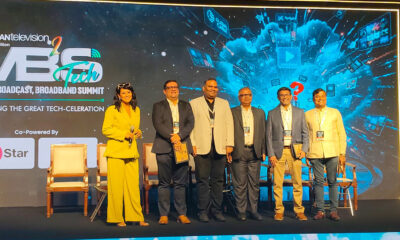
Last year at the Video and Broadband Summit, Doordarshan director general Supriya Sahu stated that FreeDish is not only used by a marginal section of the society but is also evolving as an alternative option for consumers. An older report of consulting firm EY predicted that the number of DD FreeDish subscribers is bound to cross 40 million by 2020.
While the experts Indiantelevision.com spoke to were optimistic about the potential for robust growth, they seemed sceptical about the scale.
Elara Capital vice president Karan Taurani did not agree with 2019 FICCI-EY report's observation about FreeDish, especially the figure of 50 million. Taurani rejected the possibility of a second home connectivity, adding that mobile is going to be the second screen for consumers. He said content consumption increment is happening on digital platforms.
PricewaterhouseCoopers (PwC) partner and leader, media and entertainment Frank D’Souza, however, believes there is some merit to the argument.
“Now the question is how many households who can get multiple connections will choose OTT rather than adding one more TV connection- that is little debatable. But the first argument has merit –lower-end consumers may shift to DD Free Dish. But the question is, will lower-end consumers be able to have multiple connections due to lack of physical space availability?” he asked.
Travelxp CEO Prashant Chothani said the growth of FreeDish has so far been propelled by free content only. Now, however, major broadcasters have pulled off their content from the platform, he highlighted.
The report also says that if large broadcasters continue to keep their content off the platform, television advertising revenues would be impacted and FreeDish’s future will be determined by the number of new channels that sign up on the platform.
“FreeDish generated an estimated Rs 20 billion of advertising revenues. In February 2019, large broadcasters removed their channels from this medium and this could impact our ad revenue forecast by Rs 10-20 billion in 2019,” the report adds.
Earlier this year, Prasar Bharati board gave a green signal to e-auctioning of DTH slots on DD FreeDish which was arbitrarily called off in October 2017. The first e-auction after recommencement witnessed intense competition. Under the revised guidelines, a total of 40 MPEG2 slots were successfully sold while the estimated revenue from the sold slots is Rs. 395 crore.
The FICCI-EY report also adds that regional, news and niche channels, especially those impacted negatively by the TRAI tariff order, are bound to build their audience through FreeDish (subject to auction base prices).
Industry experts, however, see things different in case of niche channels.
“I don’t know how much they will try and do that because the market for niche channels is different and the people who are going to access DD Free Dish – the consumer is different. It may not fit the target segment of such channels,” D’Souza argued.
According to Chothani, niche channels don’t see DD FreeDish as a viable option and are not going to jump on its bandwagon.
In addition to that, he also pointed out that niche channels won’t be negatively impacted by the new tariff order. According to the 4k pioneer, niche channels will benefit from the new regime because consumers won’t shy away from paying for good content.
“One of the fundamental premises of new tariff order is also to bring transparency in the system. Consumers’ habits build over time and also change. If they want to see the content which they were seeing earlier and now they are not getting because of NTO, in due course of time, they may subscribe. If the content is strong enough they will subscribe,” he opined.
Taurani said niche channels opting for DD FreeDish remains a possibility mired in a couple of constraints. Apart from limited slots, what could also deter niche channels from staying off FreeDish is the high carriage fee.





DTH
DD Free Dish e-auction revenue dips to Rs 642 crore as slot sales fall
Revenue dips as revised norms reshape bidding in 94th round
NEW DELHI: Prasar Bharati’s DD Free Dish has closed its 8th annual, and 94th overall, e-auction for MPEG-2 slots with total collections of Rs 642 crore for the period April 1, 2026 to March 31, 2027.
That is lower than last year’s Rs 780 crore haul, with 55 slots sold compared with 61 in FY25–26. The softer topline reflects both a slimmer inventory and a recalibrated auction framework.
This was the first auction conducted after amendments to the e-auction methodology, including tighter eligibility norms and a revised reserve price structure for MPEG-2 slots. The stated aim was greater transparency and more serious participation. The immediate outcome appears to be more measured bidding in certain categories.
Day one set the tone. Eight slots were sold, six in the premium Bucket A+ and two in Bucket A. The strong early action in A+, which typically houses Hindi GECs and movie channels, reaffirmed the enduring appeal of mass Hindi programming on the platform.
Among the broadcasters securing slots in the initial rounds were Zee Entertainment Enterprises, Sony Pictures Networks India, Viacom18’s Colors network, Sun Network and Shemaroo Entertainment. Their continued presence signals that, despite the pull of digital platforms, Free Dish remains a strategic must have for legacy networks chasing scale in price sensitive markets.
The final bouquet of 55 channels leans heavily towards Hindi news, movies, devotional fare, Bhojpuri and regional programming.
In Hindi news, familiar heavyweights such as Aaj Tak, ABP News, India TV, News18 India, Republic Bharat and Zee News made the cut. Entertainment and movie offerings include Colors Rishtey, Star Utsav, Dangal TV, Sony Pal, Shemaroo TV, Goldmines, B4U Movies and Zee Biskope. Devotional viewers will find Aastha, Sanskar and Sadhna Gold among the selected channels.
Regional representation includes Sun Marathi, Fakt Marathi, PTC Punjabi and GTC Punjabi.
Equally telling were the absences. Broadcasters such as Big Magic, Filamchi Bhojpuri, India News, Bharat Express, Movieplex Maithili, TV9 Marathi, Shemaroo Marathibana, Zee Chitra Mandir and Satsang did not participate. The pullback is particularly visible across Marathi, Bhojpuri, Maithili and spiritual programming. Industry observers point to the revised reserve prices, tighter eligibility norms and a reassessment of commercial viability as possible factors.
DD Free Dish continues to beam into over 40 million homes, largely in rural and semi urban India. For advertisers and broadcasters alike, it offers efficient access to Bharat markets where pay TV penetration remains uneven and OTT subscriptions are limited.
The moderation in revenue this year may be read as a pause rather than a retreat. Fewer slots, a reworked auction playbook and evolving broadcaster strategies have clearly shaped outcomes. Yet premium Hindi entertainment retains its pull, and the platform’s mass reach remains hard to ignore.
As the FY26–27 line-up settles in, the mix of winners and walkaways will define the private satellite channel landscape on DD Free Dish for the year ahead.