Components
BT Tech Today Congress: Empowering change through technology innovation and collaboration

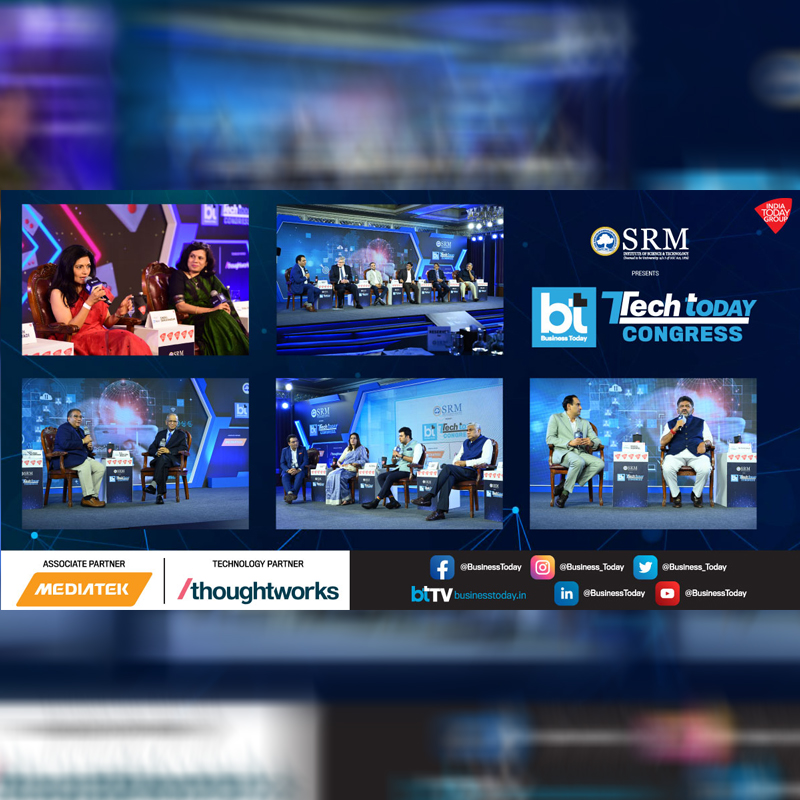
Mumbai: The Business Today’s inaugural Tech Today Congress, a highly anticipated gathering of technology professionals, entrepreneurs, and esteemed business leaders committed to harnessing the power of technology for transformative change, took place on 2 June in Bengaluru. The event served as an immersive platform for engaging discussions, thought-provoking panels, and invaluable networking opportunities, featuring an impressive line-up of distinguished speakers from various sectors.
With a primary focus on cutting-edge technologies including artificial intelligence, machine learning, blockchain, and the future of work, the Tech Today Congress aimed to explore the vast potential of technology in revolutionising industries and society as a whole. With over 200 delegates in attendance, the event fostered a dynamic environment conducive to knowledge sharing and collaborative ideation.
The Tech Today Congress showcased an unparalleled roster of speakers, featuring globally recognised figures such as DK Shivakumar, Ashwini Vaishnaw, Sindhu Gangadharan, Irina Ghose, Dr Manish Gupta, and many more. These luminaries brought their wealth of expertise and insights to the forefront, providing invaluable perspectives on the role of technology in shaping the future.

Infosys founder N.R. Narayana Murthy shared inspiring anecdotes from his entrepreneurial journey during a session titled “India’s Techade: The Skills. The People. Vision for the Next Decade”. Murthy’s speech resonated with the audience as he highlighted the challenges he faced while taking Infosys public in the early 80s, demonstrating the tenacity required to build a successful company.
The enthralling session titled “AI: Super Intelligent. Super Trouble” included esteemed speakers like Jaideep Kewalramani (Head of Employability Business & COO, TeamLease Edtech), Kanishk Gaur (Founder & CEO, India Future Foundation), and Vinayak Godse (CEO, Data Security Council of India), with the session moderated by Aayush Ailawadi.
India Future Foundation founder & CEO Kanish Kaur said, ”Every new start-up getting funded has AI and ML enabled. We want AI that can safeguard user privacy, AI that does not have biases, and AI that can prevent misuse- aspects like informational warfare.”
Kewalramani said that every digital job is at risk because of AI. Talking about India’s part in the AI revolution, Kewalramani said, “We are the tech hub of the world and India recognised the power of AI early on.”
Godse said, “We are putting a lot of corporate workloads on AI systems which is creating a lot of problems with privacy and ethics.“
Continuing the exploration of artificial intelligence, the subsequent session titled “Keeping an ‘AI’ for Transforming Industries & Society” featured Romesh Wadhwani (Chairman & Founder, SAIGroup) and was moderated by Aayush Ailawadi.
The Congress also delved into the 5G revolution and its impact on technology, connectivity, and collateral benefits in a session titled “The 5G Revolution: The Tech. The Connect. Collateral Benefits.” Distinguished speakers for this session included Mohan Rao Goli (CTO, Samsung R&D Institute India), Muralikrishnan B (President, Xiaomi India), Manoj Gurnani (Head Strategy & Technology, India, Nokia), Harmanpreet Dhillon (CTO, Airtel, Karnataka Circle), and the session was moderated by Siddharth Zarabi.
A compelling session titled “Catching a Cold: Tech Winter. Weathering the Storm.” shed light on the challenges posed by the ever-evolving technology landscape. The esteemed panel for this session comprised Siddarth Pai (Founding Partner, 3one4 Capital), Mahankali Srinivas Rao (Chief Executive Officer, T-Hub), Anas Rahman Junaid (Founder & MD, Hurun India), with Sourav Majumdar serving as the moderator.
Exploring the digital landscape, a session titled “Digital Bharat & The New Internet” featured Barnik Chitran Maitra, managing partner, head of Arthur D. Little India & South Asia, offering invaluable insights into India’s digital transformation.
A highlight of the Tech Today Congress was the session titled “World on a Chip: Wafer Wars. Tech Dominance. Supply Crimp.” Esteemed speakers for this session included David Reed (CEO, Vedanta Foxconn Semiconductor), Neil Shah (Vice President – Research, Counterpoint Research), Hitesh Garg (India Country Manager, NXP Semiconductors), Santhosh Kumar (President & MD, Texas Instruments India), and Dr Satya Gupta (President, VLSI Society of India). This session was moderated by Siddharth Zarabi. The speakers emphasised India’s potential to become a supply hub of semiconductor chips amid increasing global demands.
“When we were raising money just before our IPO, we had to take our kitty to Rs 1.2 crores. We had to go to a lot of friends and relatives. Almost everybody who was well-to-do asked hundreds of questions and they didn’t put money in. The only people who put money were my sisters, brothers who had very little savings,” Murthy said.
“I have said this many times. As long as we use any technology in an assistive manner then we all become better and better. How can I use AI in an assistive manner? You can build expert systems, you can improve in a corporation, you can improve your own work productivity, and you can help diagnose diseases. In India, I would like to use AI in food and agriculture and if AI can help us in growing food with minimal agriculture,” Murthy added.
The Tech Today Congress also focused on the critical issue of gender disparity in the tech industry in a session titled “Women in Tech. Leaking Pipeline. Missing Talent.” Esteemed speakers Sindhu Gangadharan (Managing Director & SVP, SAP Labs India) and Irina Ghose (Chief Operating Officer, Microsoft India) shed light on the underrepresentation of women and discussed strategies to bridge the gender gap. The session was moderated by Aayush Ailawadi.
Exploring the expansive realm of gaming, the session “New Gaming Frontier: Leveraging Cutting-Edge Technologies. Gaming” featured Rajan Navani (Founder & CEO, JetSynthesys), Sai Srinivas Kiran G (Co-Founder & CEO, Mobile Premier League), and Sean Hyunil Sohn (India CEO, KRAFTON, Inc. India), with Aayush Ailawadi serving as the moderator.
Additionally, the Tech Today Congress placed significant emphasis on the development of inclusive artificial intelligence in India in a session titled “AI for India: Inclusive AI. Developing an AI-ready culture. R&D and Innovation,” with Dr Manish Gupta (Director, Google Research India) providing valuable insights. The session was moderated by Aayush Ailawadi.
Karnataka Deputy CM DK Shivakumar was also part of a session which mainly focused on the recent Karnataka win for Congress as well as the state’s development. “Today the world is looking at Bengaluru. The world leaders are travelling first to Bengaluru and then to Delhi,” Shivakumar said as he assured that the newly formed Congress govt is dedicated to improving Bengaluru’s infra.
The congress concluded with a highly anticipated session led by Railways, Communications, and Electronics & Information Technology minister Ashwini Vaishnaw. In his talk on “Communicate India: The Big Picture. 5G Foundation. Industry 4.0. Digital Nation,” Vaishnaw highlighted the importance of robust digital infrastructure, 5G technology, and Industry 4.0 in accelerating India’s journey towards becoming a digital nation.
The Business Today’s Tech Today Congress left attendees inspired and equipped with new knowledge and ideas to drive technological advancements in their respective fields. The event’s resounding success reflects the growing enthusiasm and unwavering commitment within the technology community to leverage innovation for positive change.

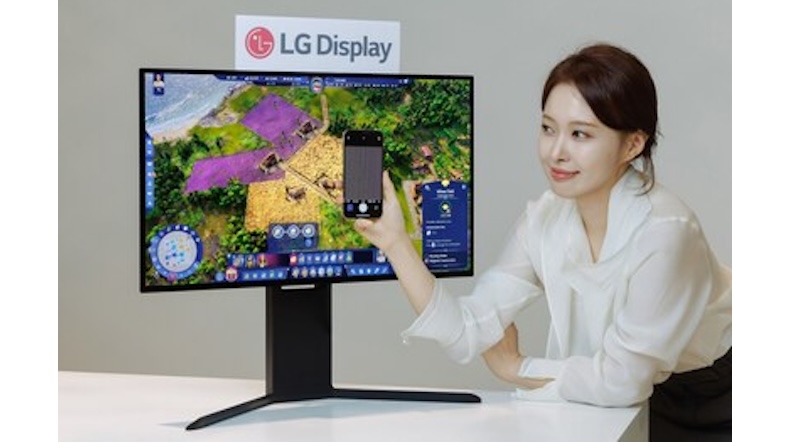
SEOUL: In the eternal battle between gamers demanding lightning-fast refresh rates and professionals craving pixel-perfect clarity, LG Display reckons it has found détente. The South Korean display titan is unveiling the world’s first 27-inch 4K OLED monitor panel that marries an RGB stripe structure with a blistering 240Hz refresh rate—a combination previously thought incompatible, like oil and water or fashion and function.
The breakthrough lies in how the pixels are arranged. RGB stripe structure lines up red, green and blue subpixels in neat rows, banishing the colour bleeding and fringing that plague lesser screens when you park your nose close to the display. It is the difference between reading crisp text and squinting at a rainbow-tinged mess. OLED panels using this method existed before, but they topped out at a sluggish 60Hz—fine for spreadsheets, useless for fragging opponents in first-person shooters.
LG Display’s engineering wizardry changes the game. By cranking the refresh rate to 240Hz whilst maintaining that pristine RGB stripe layout, the company has produced a panel that works equally well for colour-critical design work and twitchy gaming sessions. Better still, the panel incorporates Dynamic Frequency & Resolution technology, letting users toggle between ultra-high-definition at 240Hz and full-HD at a frankly ludicrous 480Hz. That is fast enough to make your eyeballs sweat.
The specs are suitably impressive: 160 pixels per inch for exceptional detail, optimised performance for Windows and font-rendering engines, and colour accuracy that should please the Photoshop brigade. LG Display achieved this by boosting the aperture ratio—the percentage of each pixel that actually emits light—and applying what it coyly describes as “various new technologies.” Translation: years of R&D and probably some sleepless nights.
Existing high-end gaming OLED monitors have relied on RGWB structures (which add a white subpixel) or triangular RGB arrangements. Both work, but neither delivers the sharpness that professionals demand. LG Display’s new stripe pattern is tailored specifically for monitor use, a recognition that staring at a screen from two feet away demands different engineering than watching telly from across the room.
The company is betting big on this technology, targeting the high-end monitor market where it already commands roughly 30 per cent of global OLED panel production. Among gaming OLED panels in mass production, LG Display claims world-leading specs across refresh rate, response time and resolution—a trifecta that sounds like marketing bluster until you check the numbers.
“Technology is the foundation of leadership in the rapidly growing OLED monitor market,” says LG Display head of the large display business unit Lee Hyun-woo. He promises to keep pushing “differentiated technologies compared to competitors”—corporate-speak for staying ahead of Chinese rivals snapping at LG’s heels.
The new panel will debut at CES 2026 in Las Vegas, where LG Display plans to woo customers and expand its lineup. Initial rollout targets high-end gaming and professional monitors, the sweet spot where people actually pay premiums for superior screens rather than settling for whatever came with their laptop.
Whether this technology reshapes the monitor market or remains a niche luxury depends on two things: pricing and production scale. But for now, LG Display has pulled off something rare—a genuine technical leap that solves a real problem. Gamers get their speed, designers get their clarity, and LG gets bragging rights. In the cutthroat world of display tech, that counts as a win.