MAM
Goafest 2026 decodes the restless mind of the new consumer
MRSI session explored how emotion, identity and culture now shape choice.

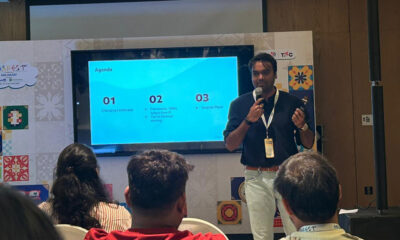
MUMBAI: The modern consumer is no longer simply shopping, they are signalling, scrolling, self-editing and second-guessing in real time. At Goafest 2026, marketers were reminded that the biggest disruption in advertising may not be technology alone, but the human mind itself. At a packed masterclass hosted by the Market Research Society of India (MRSI) at the Taj Cidade De Goa Horizon, behavioural experts Parameswaran Venkataraman, co-founder of 3 Big Things, and Prakash Sharma, co-founder of 1001 Stories, unpacked what they described as “The Reset Consumer,” a rapidly evolving audience whose decisions are now driven by emotion, identity, uncertainty and cultural context as much as by price or product.
And if marketers were hoping for neat formulas or predictable playbooks, the session delivered the opposite.
Today’s consumers, the speakers argued, are layered, contradictory and constantly evolving. They are premium buyers who still hunt for discounts, wellness seekers who doom-scroll at midnight, and hyper-connected users who simultaneously crave authenticity and validation from algorithms.
In short, the consumer journey has become less of a funnel and more of an emotional obstacle course.
The session explored how the rules governing purchase behaviour are changing dramatically in the digital-first era. Traditional demographic labels age, income, geography are no longer sufficient to explain why people buy what they buy. Instead, motivations are increasingly rooted in aspiration, identity and emotional resonance.
Consumers today are not merely asking, “What does this product do?”
They are asking, “What does this product say about me?”
That shift, according to the speakers, is fundamentally reshaping how brands must communicate. Advertising can no longer rely solely on functional messaging or glossy perfection. Instead, brands are expected to behave like participants in culture aware, conversational and emotionally intelligent.
Throughout the discussion, the speakers repeatedly stressed that modern marketing is moving away from interruption-led communication towards emotionally contextual storytelling. People no longer engage with brands because they are loud. They engage because they feel understood. And understanding consumers today requires decoding behaviour that often appears irrational on the surface. The session highlighted how modern audiences increasingly make decisions emotionally first and rationally later. Whether it is choosing a sneaker brand, a fintech platform, a skincare label or even a streaming subscription, purchases are now deeply intertwined with self-expression and belonging.
The rise of creators and social communities has accelerated this shift further. Consumers today trust creators, niche communities and peer-driven recommendations more than polished corporate messaging. Social validation has become a core driver of modern consumption behaviour, turning platforms into both marketplaces and emotional ecosystems.
The speakers noted that this has created a new kind of consumer anxiety as well, one shaped by endless choice, comparison culture and digital overload. Ironically, the more options consumers have, the harder decision-making has become. That has created what the speakers described as a “psychology of reset”, where consumers constantly reinvent preferences, identities and loyalties. Brand allegiance is weaker, experimentation is higher and attention spans are increasingly fragmented.
A consumer may binge luxury content one day and search for budget hacks the next. They may reject overt advertising while enthusiastically buying products recommended casually by creators online. For marketers, that means consistency alone is no longer enough. Relevance must now be earned continuously.
The session also explored how economic uncertainty and post-pandemic behavioural shifts have made consumers more emotionally cautious. Many buyers now seek products and brands that offer reassurance, familiarity and emotional comfort, even in categories traditionally driven by utility.
This behavioural evolution is becoming visible across sectors from beauty and wellness to fintech, entertainment and retail. Even brand tone is changing. Consumers increasingly prefer brands that sound human rather than corporate, conversational rather than scripted. Humour, vulnerability and relatability are outperforming polished perfection in an environment where audiences are deeply attuned to authenticity.
The irony, of course, is that this demand for authenticity comes at a time when AI-generated content is flooding digital platforms.
The speakers hinted at a growing challenge for marketers: how to remain emotionally believable in an era where consumers are becoming increasingly capable of spotting artificiality. In a world dominated by algorithms and automation, human insight itself may become the ultimate premium. The discussion also underscored the importance of behavioural science in shaping future marketing strategies. Data can reveal what consumers are doing, the speakers suggested, but behavioural understanding explains why they are doing it.
And that “why” is becoming the battleground where modern brands will either win attention or disappear into the scroll.
The session resonated strongly with marketers and agency professionals attending Goafest 2026, particularly as the industry grapples with AI disruption, shrinking attention spans and rapidly shifting consumer loyalties.
By the end of the masterclass, one message stood out clearly, consumers have not become impossible to understand, they have simply become more human.
Messy, emotional, contradictory and constantly evolving. And for brands hoping to stay relevant in 2026, understanding that complexity may be the most important insight of all.